Franz Wright, winner of the Second Annual Denise Levertov Award from Image Journal of the Arts and Religion speaks on Tuesday, May 17 at 7:30 pm at the Seattle Art Museum. Free. Public reception, celebration and booksigning follows.
For more information, see http://www.imagejournal.org/news/local.asp
"Image journal and the Department of English at Seattle Pacific University established the Levertov Award to honor one of the twentieth century's greatest poets. Levertov, who spent her last years in Seattle , embraced the landscape and culture of the Pacific Northwest. Levertov's identity as a Christian believer—a pilgrim whose faith was inextricably entwined with doubt—became another important facet of her work, particularly in her later poetry.
The Levertov Award is given annually to an artist or creative writer whose work exemplifies a serious and sustained engagement with the Judeo-Christian tradition."
Wednesday, May 04, 2005


Monday, May 02, 2005

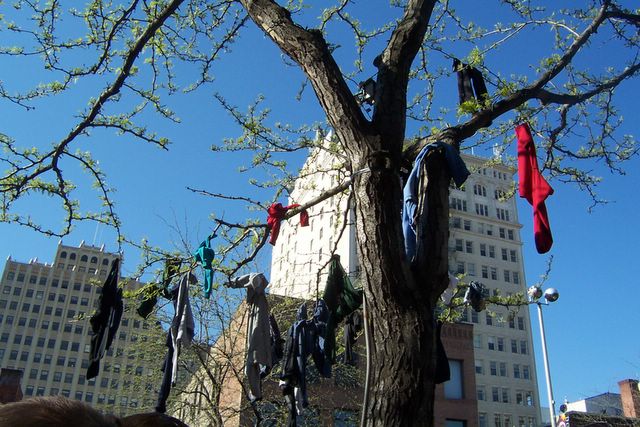

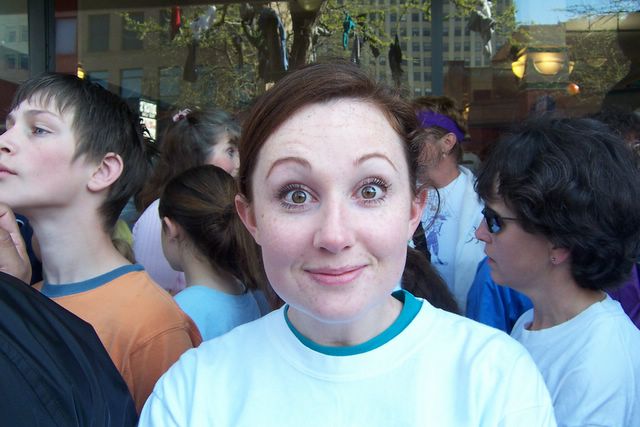
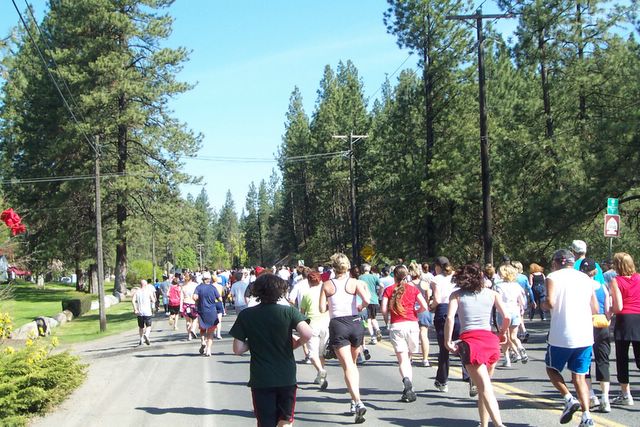

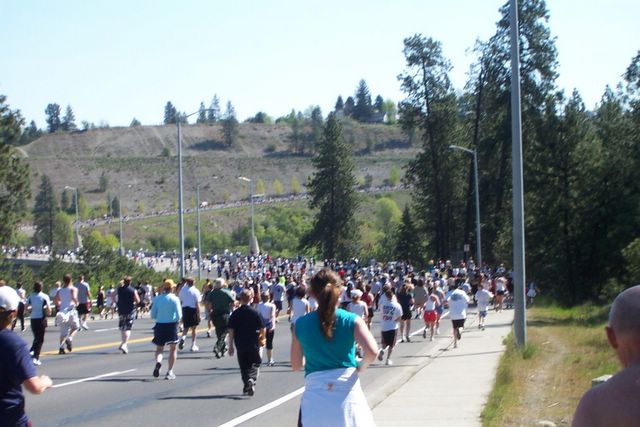
finish line
Judd took our "finisher" pictures...we all looked marvelous and had a wonderful time. Check out the upcoming June issue of Northwest Runner magazine for my Bloomsday article and an interview with Don Kardong, this year's new Race Director and Bloomsday Race Founder/former Olympian.
Thursday, April 28, 2005
bizness of writing (get to work!)
I'll be writing an article about Don Kardong & Bloomsday, which is due to my editor/publisher by May 9th. Don called me last night and we tentatively have an interview set up for the Wednesday after the race, which is this Sunday. I'll need to take notes at the trade show Friday night and since Don gave me his cell phone number to contact him during the busy race weekend, I'd like to track him down and take his picture--preferably on race day...even sweeter if it was post-race with the overall winners, but even better if it was a picture of Don with the top male and female finishers who are Washingtonians, or at least from the Northwest since it is for Northwest Runner magazine. But I'll still be on the course during the awards ceremony, most likely, since the elite runners finish the 12k course in awesome time. And I'm not willing to give up my entry (and not get the finisher shirt!) just for the sake of journalism!
In the meantime, poetry, poetry, memoir, poetry, non-fiction, poetry, poetry, poetry...
POETRY THESIS MANUSCRIPT DUE IN 20 DAYS!
My reading list is moving right along...in fact, I keep reading more and adding more books to the list. The most difficult part will be deciding which 15 to keep on the list.
And I recently finished Modern Ocean the first book of poems published by James Harms. I LOVED it!! Really intriguing poems, what I would defend as being narrative lyric poems, mostly about growing up and living in San Diego CA. The setting is there, but the culture and family around the speaker of these poems is what is most engaging, and which is the core of the subject. There is a balanced mixture of light and dark (as in the yin/yang//good/evil emotional forces of life and human experience). Harms is a master of subtle emotional tensions, understating the conflict to really pull the reader into his poems and construct a co-experience...as I read, I felt like I was discovering meaning alongside the speaker--a co-creator of the experience, through the poet's use of point of view and tense. Wow! I'm excited to share with Jonathan how much I really, really loved this book! I see much of what I'm attempting to do in my own work, being done in Harms' book. He nails it right on.
In the meantime, poetry, poetry, memoir, poetry, non-fiction, poetry, poetry, poetry...
POETRY THESIS MANUSCRIPT DUE IN 20 DAYS!
My reading list is moving right along...in fact, I keep reading more and adding more books to the list. The most difficult part will be deciding which 15 to keep on the list.
And I recently finished Modern Ocean the first book of poems published by James Harms. I LOVED it!! Really intriguing poems, what I would defend as being narrative lyric poems, mostly about growing up and living in San Diego CA. The setting is there, but the culture and family around the speaker of these poems is what is most engaging, and which is the core of the subject. There is a balanced mixture of light and dark (as in the yin/yang//good/evil emotional forces of life and human experience). Harms is a master of subtle emotional tensions, understating the conflict to really pull the reader into his poems and construct a co-experience...as I read, I felt like I was discovering meaning alongside the speaker--a co-creator of the experience, through the poet's use of point of view and tense. Wow! I'm excited to share with Jonathan how much I really, really loved this book! I see much of what I'm attempting to do in my own work, being done in Harms' book. He nails it right on.
Monday, April 25, 2005
Memoir
I've enjoyed researching and studying the nonfiction subgenre of memoir, in preparation for an informal presentation that a classmate and I are preparing for Thursday night's theory class. The text basis for our discussion is A Unfinished Woman by Lillian Hellman, a controversial memoir.
I'd like to re-read some of the memoirs that I've read in the past (such as A Girl Named Zippy by Haven Kimmel). I read them without really considering it's authentic literary value beyond the pure entertainment of the narrative and characters. Moreover, I never thought to seriously question how or why the memoir was being written. I read with an easy kind of faith.
Here are some of the websites where we've gathered information from:
I'd like to re-read some of the memoirs that I've read in the past (such as A Girl Named Zippy by Haven Kimmel). I read them without really considering it's authentic literary value beyond the pure entertainment of the narrative and characters. Moreover, I never thought to seriously question how or why the memoir was being written. I read with an easy kind of faith.
Here are some of the websites where we've gathered information from:
- Memoir, a explanatory definition of the subgenre
- A New York Times Magazine article from 1996, "Confessing for Voyeurs: The Age of The Literary Memoir Is Now" by James Atlas
- a review from 2000 of Dave Eggers and his "ironical memoir"
- Judith Barrington's Writing the Memoir: From Truth to Art
and for any teachers out there... a high school memoir writing unit plan
thesis bond paper
For those Spokanites who are writing your thesis this quarter or in the near future, here's a place to purchase your 100% cotton thesis bond paper. I'm not exactly sure if Paper Plus is cheaper than the school bookstore, but if you buy it on a Monday and mention the Spirit 101.9 fm radio ad, you get an extra 10% off. A pack of 500 sheets (of 24 lb text weight) is $32.35, before the discount.
Friday, April 22, 2005
Sedaris slept overnight in Spokane
First...I admit it: I sometimes plan too many things for one day, my To Do is a tad unrealistic. I'm optimistic and underestimate the time needed and the actual time I have. I overestimate my stamina and ability to stay focused and on-task; other opportunities arise and I say "yes" to them.
But I did meet David Sedaris yesterday. He is smaller than I imagined him to be. Shorter, yes, but also just a smaller presence (maybe small head, too), and smaller-boned, which doesn't seem to fit his writing which is bold and declarative and in-your-face funny. And the pictures of him on the back of his book make him look tall and skinny. But really, he's just skinny and kind of short, for a guy. (See Jeremy's pictures.)
I took a brief break from taking tickets at the door and cut in line in front of Ashley (another MFA poet) to ask Sedaris to sign my copy of Barrel Fever. (Before leaving my house, after franticly looking for my copy of Holidays on Ice, I remembered that I loaned it to my mother and it's still sitting on the guest-room dresser at their house near Seattle.)
Sedaris asked me, "What's that smell? You smell 'fresh'." I was confused for a second, then felt somewhat embarrased when I remembered that I had sprayed some Victoria Secret's "Love Spell" (the purple bottle) on my skin. My fiance hates it, says it smells like canteloupe and he hates canteloupe. He calls it "Love Repell" and so I only wear it when I'm not going to be anywhere near my fiance. That's why I impulsively put a little on before dashing downtown. (I only have a little over three months to use up the last of it.)
So I ended up telling Sedaris the whole story behind the smell. He chuckled as put two mushroom stamps on the title page of my book (my copy of his book) and signed it for me. I thought he might mention something about me having the same name as his sister, and how much he loves that name. But he didn't. Instead, I blabbed about "Love Spell" as the next five people in line heard my story as well. I think a fit of nervousness came over me. But at least I made Sedaris laugh!
During the Q & A, he talked about how he likes to ask a question of each person who asks him to sign a book. Maybe he'll put our encounter in his diary and read that at a future reading.
April 22, 2005: Spokane, WA
This woman in the book signing line came up to me and smelled, so I asked her, "What's that smell?" . . . .
Hopefully he didn't find it repulsive. He did roll his eyes around in circles when I told him it was called "Love Spell" as if to mimic its name. He probably did find it bearable, at least, or else he wouldn't have brought it up.
Which reminds me that I had to sit near a really smell man throughout the entire Sedaris reading, and it burned my eyes. As a volunteer, I didn't have a seat for the sold-out show. So I had to either stand in the back or sit on the floor. I found a little nook in the back handicapped section, which was actually used for overflow seating. I was told there would be no late seating, but during the second essay or so this man was escorted into our area and given a metal seat (like those found in church basements) to sit on. It was too dark to see what he looked like, and I didn't want to be rude and stare, and I wanted to stay focused on what Sedaris was reading onstage. But as soon as he sat down, everything came wafting towards me. It immediately made me think to myself, "Is this man homeless?" He had dreadlock like hair, I could tell that much. Maybe it was his shoes, more than body odor. It was like how my wet socks smell after a two-day backpacking trip. It was a sour, pungent smell, and wasn't that horrible compared to what it could have been. I realized that is why the man's seat was placed behind where I was sitting, against the wall, rather than next to the other chairs and the guests sitting in rows. There was obvious room for his chair to join their rows. The man who escorted him there, the theatre manager I think, must have known he smelled. Since tickets were $40 for non-students, I couldn't figure out how this man got there. Maybe he didn't know his shoes were so stinky. And of course, since I was sitting on the floor, maybe I was the only person who realized it. He had a deep laugh and expressed it heartily throughout the rest of the reading. I was glad he was enjoying himself. Later, I saw him in the balcony drinking a can of pop and walking back down to the first level. He staggered like a drunk. Maybe that wasn't soda in the can. Again, it was too dark to tell. But his skin looked clean enough. It was bizarre.
After Sedaris, the rest of the evening was not very interesting. What reader (either nonfiction writer or poet) wants to follow Sedaris? Of course they won't be as funny! I was too impressed by Sedaris, who I'm sure shocked the Spokane crowd with his "dirty" essays (as he referred to one, after reading it), to be objective to the two other guys. And over half of the 700-person audience had left at intermission.
Still, it was a worthwhile evening. New York doesn't come to Spokane very often. And it's really, really interesting to see who comes to see a writer like Sedaris. It's like all the cool literary readers of Spokane were at the Met, along with all the devoted NPR listeners from Moses Lake to Couer d'Alene--a mostly grey-haired crowd, I think. This one woman, also sitting in my area, laughed so loud. She was the loudest in the theatre. I would watch her and thought she was going to fall back in her chair, her guffaws were so forceful. And she was a big woman. When Sedaris said, before wrapping up the Q & A, "If Sues is here, I'll see you at the front," she yelled, "Yay!"
P.S. I did finish my Lopate technique journal, had a great run with Emerson (it was so warm and sunny I wore shorts & T-shirt for the first time since Sept.), I thought about poetry, did an errand at Paper Plus (to solve a problem that arose unexpectedly), and went grocery shopping after Sedaris.
But I did meet David Sedaris yesterday. He is smaller than I imagined him to be. Shorter, yes, but also just a smaller presence (maybe small head, too), and smaller-boned, which doesn't seem to fit his writing which is bold and declarative and in-your-face funny. And the pictures of him on the back of his book make him look tall and skinny. But really, he's just skinny and kind of short, for a guy. (See Jeremy's pictures.)
I took a brief break from taking tickets at the door and cut in line in front of Ashley (another MFA poet) to ask Sedaris to sign my copy of Barrel Fever. (Before leaving my house, after franticly looking for my copy of Holidays on Ice, I remembered that I loaned it to my mother and it's still sitting on the guest-room dresser at their house near Seattle.)
Sedaris asked me, "What's that smell? You smell 'fresh'." I was confused for a second, then felt somewhat embarrased when I remembered that I had sprayed some Victoria Secret's "Love Spell" (the purple bottle) on my skin. My fiance hates it, says it smells like canteloupe and he hates canteloupe. He calls it "Love Repell" and so I only wear it when I'm not going to be anywhere near my fiance. That's why I impulsively put a little on before dashing downtown. (I only have a little over three months to use up the last of it.)
So I ended up telling Sedaris the whole story behind the smell. He chuckled as put two mushroom stamps on the title page of my book (my copy of his book) and signed it for me. I thought he might mention something about me having the same name as his sister, and how much he loves that name. But he didn't. Instead, I blabbed about "Love Spell" as the next five people in line heard my story as well. I think a fit of nervousness came over me. But at least I made Sedaris laugh!
During the Q & A, he talked about how he likes to ask a question of each person who asks him to sign a book. Maybe he'll put our encounter in his diary and read that at a future reading.
April 22, 2005: Spokane, WA
This woman in the book signing line came up to me and smelled, so I asked her, "What's that smell?" . . . .
Hopefully he didn't find it repulsive. He did roll his eyes around in circles when I told him it was called "Love Spell" as if to mimic its name. He probably did find it bearable, at least, or else he wouldn't have brought it up.
Which reminds me that I had to sit near a really smell man throughout the entire Sedaris reading, and it burned my eyes. As a volunteer, I didn't have a seat for the sold-out show. So I had to either stand in the back or sit on the floor. I found a little nook in the back handicapped section, which was actually used for overflow seating. I was told there would be no late seating, but during the second essay or so this man was escorted into our area and given a metal seat (like those found in church basements) to sit on. It was too dark to see what he looked like, and I didn't want to be rude and stare, and I wanted to stay focused on what Sedaris was reading onstage. But as soon as he sat down, everything came wafting towards me. It immediately made me think to myself, "Is this man homeless?" He had dreadlock like hair, I could tell that much. Maybe it was his shoes, more than body odor. It was like how my wet socks smell after a two-day backpacking trip. It was a sour, pungent smell, and wasn't that horrible compared to what it could have been. I realized that is why the man's seat was placed behind where I was sitting, against the wall, rather than next to the other chairs and the guests sitting in rows. There was obvious room for his chair to join their rows. The man who escorted him there, the theatre manager I think, must have known he smelled. Since tickets were $40 for non-students, I couldn't figure out how this man got there. Maybe he didn't know his shoes were so stinky. And of course, since I was sitting on the floor, maybe I was the only person who realized it. He had a deep laugh and expressed it heartily throughout the rest of the reading. I was glad he was enjoying himself. Later, I saw him in the balcony drinking a can of pop and walking back down to the first level. He staggered like a drunk. Maybe that wasn't soda in the can. Again, it was too dark to tell. But his skin looked clean enough. It was bizarre.
After Sedaris, the rest of the evening was not very interesting. What reader (either nonfiction writer or poet) wants to follow Sedaris? Of course they won't be as funny! I was too impressed by Sedaris, who I'm sure shocked the Spokane crowd with his "dirty" essays (as he referred to one, after reading it), to be objective to the two other guys. And over half of the 700-person audience had left at intermission.
Still, it was a worthwhile evening. New York doesn't come to Spokane very often. And it's really, really interesting to see who comes to see a writer like Sedaris. It's like all the cool literary readers of Spokane were at the Met, along with all the devoted NPR listeners from Moses Lake to Couer d'Alene--a mostly grey-haired crowd, I think. This one woman, also sitting in my area, laughed so loud. She was the loudest in the theatre. I would watch her and thought she was going to fall back in her chair, her guffaws were so forceful. And she was a big woman. When Sedaris said, before wrapping up the Q & A, "If Sues is here, I'll see you at the front," she yelled, "Yay!"
P.S. I did finish my Lopate technique journal, had a great run with Emerson (it was so warm and sunny I wore shorts & T-shirt for the first time since Sept.), I thought about poetry, did an errand at Paper Plus (to solve a problem that arose unexpectedly), and went grocery shopping after Sedaris.
Thursday, April 21, 2005
To Do:
- finish reading Phillip Lopate's book of selected writings, Getting Personal and write a one-page technique journal for class (an interesting review, won't let it taint my opinion though)
- finish reading Ann Townsend's book of poetry Dime Store Erotics
- start reading Modern Ocean, James Harms's first book of poetry
- work on revision for one particular poem that's been on the table for almost 2 weeks now
- finish reading this week's submissions for Willow Springs (which aren't really "this week's" but it's what I took to read, really they were sent a few weeks ago, or a month or more...that lit mag backlog, or slush pile...it just adds us)
- fit in a run with Emerson somewhere in the day
- go grocery shopping: basics needed...milk, bread, bananas, deli meat and cheese
- stop by school to turn in paper for class and Willow Springs submissions
- volunteer at Get Lit! and meet David Sedaris after his reading
- brainstorm what treats to bring to class next week as penance for missing class for Sedaris
Think I can do it all in one day?
Monday, April 18, 2005
Safe in Heaven Dead
I recommend this book by Sam Ligon, and not just because he's a hilarious professor & faculty editor for "Willow Springs." I only purchased his novel (published by HarperCollins) tonight at the MFA Faculty Reading, but heard him read an excerpt at a reading in February. It was poignant and funny. Tonight, he read an excerpt from a work-in-progress. It's nights like these when I'm especially proud to be an Eastern student, and proud to live in Spokane. Jonathan, Nance, Chris, and Greg also read tonight. John watched from the side with his wife, and Natalie showed her support in the back, knitting as they all read. A small crowd of listeners, but a great evening to celebrate our MFA professors and the poems and stories they write.
hot water
Lately, I've had the incredible longing to soak myself in a very hot bubble bath. This has gone on for the past few weeks now. I suppose it has something to do with the slowly rising stress level with my approaching thesis manuscript deadline and defense. It's a fleeting desire. I feel it when I wash my cold hands after coming inside from playing with Emerson. I feel it after coming home from class at night. It's a longing that remains unfulfilled, even though I have small bottles of bubble bath and skin oils that I've collected over the years as hotel compliments or gifts from friends. It remains unfulfilled because I do not have a bathtub. My only solace is in taking a hot shower in my 3/4 bathroom.
But I never do this at night when the hot bath urge arises. I'm an economical environmentalist, and have no desire to waste water on such a luxury if I have no real need to bathe. My rent includes utilities, so money is not the issue. I've been to the real Mexico for a mission trip, the side unseen by tourists. I know what it feels like to lack clean water, a shower...day after day. It doesn't compare to the chosen depravity of a backpacking trip, where the rustic wilderness provides no cleansing water except from frigid alpine lakes or rivers.
I suppose I've conditioned myself to seek refuge in a hot bubble bath, starting back from my high school days, maybe even before that. It began as a ritual I learned from my sister.
Prepare the bath. Run the water...Hot, so steam fills the bathroom. Light a few candles. Select soothing music to play on a small boom box on the floor. Add oil and bubble solution to the running water. To conserve prescious condiments and maximize bubble output, add liquid dishwashing soup, the kind that softs on your hands if you have it. Doesn't matter really, the whole point is the bubbles. Big and fragile.
Throw in a loufa, a washcloth, maybe one of those rare blow-up bath pillows. Sometimes I would try to read while soaking in the bath, but it was too difficult to keep my fingertips dry, especially to turn the pages. My hands would crave the hot depths of the bath.
I grew up with a hottub, a luxury my parents added to our backyard deck layout when I was in elementary school. I think we had it even before a VCR, and I was one of the first kids in my group of friends to get one of those in 1985. I used to do cannonballs into the small octagon hottub when my parents weren't looking. But my dad always found out eventually. I was ignorant to realize just how much volume of water was depleted. Dad always knew the appropriate water level, saw the darkened wet wood deck around the edge of the tub. He always knew when I had been playing around.
Eventually my Dad enclosed the hottub in its own "Sun Room," as we called it. This allowed the hottub to be used year-round, no matter what the weather. I remember playing in that hottub as if it was my own small, private swimming pool. I loved to swim. And a hottub was a glorious upgrade from my green plastic 12" deep pool with the mini slide that was made to resemble the neck of a turtle. Since my siblings were so much older, I usually had the hottub to myself. My mom would sunbathe, keep only a half-eye on me when she wasn't absorbed in her current issue of "Good Housekeeping" magazine. She trusted my swimming ability. I was a confident fish. (And eventually would join the school swim team in 9th grade and be a lifeguard for 8 years throughout high school and college.)
Because of my simulated only-child status, I found interesting ways to amuse myself. In the cheap plastic pool, it was to bring our Chihuhua dog Chico in with me, for just a quick deep. But more eager to join me, were the ducklings we had one summer. (I grew up on a farm, so each spring brought a number of new hatches of chickens, geese, and ducks, depending on what was going on in 4-H that year.) I'd sit wearing my purple one-piece suit and small brown ducklings with gentle yellow feathers at their beaks would swim around me, twittering their small wings and gasping small quacks. Eventually, one or more of them would go poop. I'd be disgusted, but still scoop it out with my hands like I did the spiders and beetles and daddy long-legs.
With the hottub, I graduated to more elaborate water play, consisting of plastic baby dolls and Barbies. Somehow I acquired a 1960's model plastic yacht-like boat, which I used as a ski boat. I had some Barbie beach items--a blow-up plastic intertube, captain chairs, table with umbrella. I rigged up some yarn, or maybe it was some plastic craft rope or something like that, as a tow rope. Ken would drive the various dolls for a ride, with tight turns and fast flybys along the beach (aka, the step of the hottub). My brother, 7 years older than I, thought this was pretty creative, and so gave me a Barbie-sized parachute to launch her off the deck railing. That summer was filled with endless self-amusement.
I enjoyed bringing Chico in for a swim, his jerky doggy-paddle movements around the circle. His eyes widened, as if in fear. I would never let him tire. Later, our new young Chihuahua "Princess" took a flying leap into the hottub and promptly sunk like a stone to the bottom. My brother, who was in the tub with me at the time, immediately grabbed her by the scruff of her neck and brought her to the surface and out of the tub. She coughed up water, bubbles came out her nose. I knew I had just witnessed by first near-death experience. Princess eventually learned to swim.
I remember taking short dips in the hottub before bed, either with my Mom, sometimes both my parents. Or my mom would just let me go in by myself for a quick 15 minute soak and play time before bed. I would stay in just long enough for my fingers to prune, a sufficient indication that I had been in as long as my body needed--that was it's way of telling me it was refreshed, I had intrepreted. I would dry off, warm steam wisping off my skin. Then hustle upstairs to change into my nightgown, rinse out my suit and hang it off the showerhead. I was pleasently sleepy by then, and wouldn't need to be read a story, or at least not the entire book.
I suppose my present urge for a hot bath is to recreate that warm bedtime experience, that cozy sense of approaching sleep. But there are so many books to read, so many stories and poems to finish. And the bedside light stays on until my eyes are too heavy for more, even if the space around my feet is still chilled.
But I never do this at night when the hot bath urge arises. I'm an economical environmentalist, and have no desire to waste water on such a luxury if I have no real need to bathe. My rent includes utilities, so money is not the issue. I've been to the real Mexico for a mission trip, the side unseen by tourists. I know what it feels like to lack clean water, a shower...day after day. It doesn't compare to the chosen depravity of a backpacking trip, where the rustic wilderness provides no cleansing water except from frigid alpine lakes or rivers.
I suppose I've conditioned myself to seek refuge in a hot bubble bath, starting back from my high school days, maybe even before that. It began as a ritual I learned from my sister.
Prepare the bath. Run the water...Hot, so steam fills the bathroom. Light a few candles. Select soothing music to play on a small boom box on the floor. Add oil and bubble solution to the running water. To conserve prescious condiments and maximize bubble output, add liquid dishwashing soup, the kind that softs on your hands if you have it. Doesn't matter really, the whole point is the bubbles. Big and fragile.
Throw in a loufa, a washcloth, maybe one of those rare blow-up bath pillows. Sometimes I would try to read while soaking in the bath, but it was too difficult to keep my fingertips dry, especially to turn the pages. My hands would crave the hot depths of the bath.
I grew up with a hottub, a luxury my parents added to our backyard deck layout when I was in elementary school. I think we had it even before a VCR, and I was one of the first kids in my group of friends to get one of those in 1985. I used to do cannonballs into the small octagon hottub when my parents weren't looking. But my dad always found out eventually. I was ignorant to realize just how much volume of water was depleted. Dad always knew the appropriate water level, saw the darkened wet wood deck around the edge of the tub. He always knew when I had been playing around.
Eventually my Dad enclosed the hottub in its own "Sun Room," as we called it. This allowed the hottub to be used year-round, no matter what the weather. I remember playing in that hottub as if it was my own small, private swimming pool. I loved to swim. And a hottub was a glorious upgrade from my green plastic 12" deep pool with the mini slide that was made to resemble the neck of a turtle. Since my siblings were so much older, I usually had the hottub to myself. My mom would sunbathe, keep only a half-eye on me when she wasn't absorbed in her current issue of "Good Housekeeping" magazine. She trusted my swimming ability. I was a confident fish. (And eventually would join the school swim team in 9th grade and be a lifeguard for 8 years throughout high school and college.)
Because of my simulated only-child status, I found interesting ways to amuse myself. In the cheap plastic pool, it was to bring our Chihuhua dog Chico in with me, for just a quick deep. But more eager to join me, were the ducklings we had one summer. (I grew up on a farm, so each spring brought a number of new hatches of chickens, geese, and ducks, depending on what was going on in 4-H that year.) I'd sit wearing my purple one-piece suit and small brown ducklings with gentle yellow feathers at their beaks would swim around me, twittering their small wings and gasping small quacks. Eventually, one or more of them would go poop. I'd be disgusted, but still scoop it out with my hands like I did the spiders and beetles and daddy long-legs.
With the hottub, I graduated to more elaborate water play, consisting of plastic baby dolls and Barbies. Somehow I acquired a 1960's model plastic yacht-like boat, which I used as a ski boat. I had some Barbie beach items--a blow-up plastic intertube, captain chairs, table with umbrella. I rigged up some yarn, or maybe it was some plastic craft rope or something like that, as a tow rope. Ken would drive the various dolls for a ride, with tight turns and fast flybys along the beach (aka, the step of the hottub). My brother, 7 years older than I, thought this was pretty creative, and so gave me a Barbie-sized parachute to launch her off the deck railing. That summer was filled with endless self-amusement.
I enjoyed bringing Chico in for a swim, his jerky doggy-paddle movements around the circle. His eyes widened, as if in fear. I would never let him tire. Later, our new young Chihuahua "Princess" took a flying leap into the hottub and promptly sunk like a stone to the bottom. My brother, who was in the tub with me at the time, immediately grabbed her by the scruff of her neck and brought her to the surface and out of the tub. She coughed up water, bubbles came out her nose. I knew I had just witnessed by first near-death experience. Princess eventually learned to swim.
I remember taking short dips in the hottub before bed, either with my Mom, sometimes both my parents. Or my mom would just let me go in by myself for a quick 15 minute soak and play time before bed. I would stay in just long enough for my fingers to prune, a sufficient indication that I had been in as long as my body needed--that was it's way of telling me it was refreshed, I had intrepreted. I would dry off, warm steam wisping off my skin. Then hustle upstairs to change into my nightgown, rinse out my suit and hang it off the showerhead. I was pleasently sleepy by then, and wouldn't need to be read a story, or at least not the entire book.
I suppose my present urge for a hot bath is to recreate that warm bedtime experience, that cozy sense of approaching sleep. But there are so many books to read, so many stories and poems to finish. And the bedside light stays on until my eyes are too heavy for more, even if the space around my feet is still chilled.
Sunday, April 17, 2005
Night of Poetry
The Get Lit! event tonight was incredible. I volunteered for the event as an usher. The evening opened with NW poet (and ex-nun) Madeline DeFrees reading four poems. She is a very, very tiny woman! Only her head was visible from behind the podium on stage. Next, was Bill Tremblay. Then....it was Robert Bly's turn to read. He recited poems from memory, gave quirky commentary between lines (even interrupting lines to insert his comic musings). An enchanted man, nearly 79 years old and who speaks with a Norwegian-Minnesota accent.
After intermission, it was then time for Rita Dove. She was mesmerizing (and even more gorgeous than her pictures). What a beautiful voice, velvetly and soft like a Spanish wine that I tried yesterday for the first time. The alliteration and smoothness of her language was really emphasized by her reading. All of the poems she read tonigher were from her newest book American Smooth.
After Dove's reading, there was a Q & A session, moderated by Chris Howell who was also the evening's MC. Dove and Bly sat on stools, and answered about 8 or so questions from various people in the audience. One question asked about how the love in their marriages have impacted their poetry, since both Dove and Bly often referred to that in their commentary between readings and Dove even read a poem specifically about her husband. They both gave beautiful, unique responses, after Bly first asked to clarify the question in reference to marriage, "Which one?"
Last night's MFA reading was also fun. I was one of the readers, and I was a bit more nervous than I expected. My man reminded me, "Deep Breaths / Read Slow, / Relax / Enjoy," and even wrote this on the page of my first poem that I was reading so I would remember this at the podium. I think nervousness is a good thing, it sharpens us for "performance" but it can also cause strange physical tension to occur in the body. For me, it's my voice. It tightens. For a poet reading aloud, my voice is what I have. It didn't help that I emptied my water bottle a few minutes before going up and didn't have a refill. And I was coughing on my spit (just a weird swallowing thing happened), two readers before my turn came. It also didn't help that the reading room was really dark, so that the audience was difficult to see from the podium. And the podium was very short, so that there was a large amount of space from the podium to the microphone, with no place to hide or relax your arms. And the light on the podium was ineffective if you held your poems higher to your eyes. So what to do, except keep the poems on the podium, stay focused and eyes down mostly to not lose my space. Take deep breaths, even if the sound went into the mic. (I was too nervous to drink from the cup of water at the podium, not sure if it was for me, or what...maybe it was gin and tonic, who knows?
Tomorrow is another busy MFA Poet Monday:
1. Finish reading Lillian Hellman's memoir, An Unfinished Woman
2. Continue revision on a poem I've been working on, and hopefully have a new version ready to share w/ Jonathan when I meet with him at 3:00
3. Meet with classmate at 4:00 regarding our Hellman/memoir presentation we're giving for NF theory class in a couple weeks
4. Be at the Masonic Temple at 6:00 to volunteer for the MFA Faculty Reading that is part of Get Lit!
And my really important goal tomorrow: find gas to purchase in Spokane that is less than $2.49/gallon!
After intermission, it was then time for Rita Dove. She was mesmerizing (and even more gorgeous than her pictures). What a beautiful voice, velvetly and soft like a Spanish wine that I tried yesterday for the first time. The alliteration and smoothness of her language was really emphasized by her reading. All of the poems she read tonigher were from her newest book American Smooth.
After Dove's reading, there was a Q & A session, moderated by Chris Howell who was also the evening's MC. Dove and Bly sat on stools, and answered about 8 or so questions from various people in the audience. One question asked about how the love in their marriages have impacted their poetry, since both Dove and Bly often referred to that in their commentary between readings and Dove even read a poem specifically about her husband. They both gave beautiful, unique responses, after Bly first asked to clarify the question in reference to marriage, "Which one?"
Last night's MFA reading was also fun. I was one of the readers, and I was a bit more nervous than I expected. My man reminded me, "Deep Breaths / Read Slow, / Relax / Enjoy," and even wrote this on the page of my first poem that I was reading so I would remember this at the podium. I think nervousness is a good thing, it sharpens us for "performance" but it can also cause strange physical tension to occur in the body. For me, it's my voice. It tightens. For a poet reading aloud, my voice is what I have. It didn't help that I emptied my water bottle a few minutes before going up and didn't have a refill. And I was coughing on my spit (just a weird swallowing thing happened), two readers before my turn came. It also didn't help that the reading room was really dark, so that the audience was difficult to see from the podium. And the podium was very short, so that there was a large amount of space from the podium to the microphone, with no place to hide or relax your arms. And the light on the podium was ineffective if you held your poems higher to your eyes. So what to do, except keep the poems on the podium, stay focused and eyes down mostly to not lose my space. Take deep breaths, even if the sound went into the mic. (I was too nervous to drink from the cup of water at the podium, not sure if it was for me, or what...maybe it was gin and tonic, who knows?
Tomorrow is another busy MFA Poet Monday:
1. Finish reading Lillian Hellman's memoir, An Unfinished Woman
2. Continue revision on a poem I've been working on, and hopefully have a new version ready to share w/ Jonathan when I meet with him at 3:00
3. Meet with classmate at 4:00 regarding our Hellman/memoir presentation we're giving for NF theory class in a couple weeks
4. Be at the Masonic Temple at 6:00 to volunteer for the MFA Faculty Reading that is part of Get Lit!
And my really important goal tomorrow: find gas to purchase in Spokane that is less than $2.49/gallon!
Friday, April 15, 2005
NPR inspired thoughts
I usually start my moments in silence, after rising from sleep settling into a book with a bowl of cereal, bagel, or cup of coffee. But this morning, I was in my car and able to listen to NPR's Morning Edition. I really enjoyed this story, History of Papal Succession Filled with Colorful Men, Intrigue. A few winters ago, I read Dan Brown's The Da Vinci Code, which included really mysterious details about the Vatican interior and ancient religious codes and order as they relate to the papacy and Catholic Church. There was also a good story about the new SAT scores.
Next Friday, April 22nd is "Writers in the School" Day here in Spokane, as part of the Get Lit! festival. I'm going to visit the Medicine Wheel Academy, an Indian Education program. The teacher has told me there are 25 students, 9th-12th grade. I asked for a unique assignment from the coordinator of the program who matches writers with teachers. I'm really looking forward to this.
Ironically, I found out from the teacher that the 22nd will be a WASL testing day...so the schedule for me coming needed to be revised from our original plan. Only 10th graders need to take the test, so I'm not sure how this will impact the class size that day. But the WASL (Washington Assessment of Student Learning) is probably one of the best examples of how the public school system works to establish conformity and emphasizes essay composition, over creative composition. I realize the benefits of the test, or rather, the aims and goals that the test is supposed to emphasize in regards to school curriculum and how teachers teach.
This is putting it nicely. I have some serious reservations about the pressure to "teach to the test" (though this is heavily denied by administrators, but teachers see through the facade and so do the kids). When I was teaching, I saw some very stupid decisions made by administrators who organized the testing. Once kids were divided into large, large groups and assigned to testing areas around the school...so instead of being in small classroom groups, some had to be in the cafetaria sitting on those awful hard, flat bench tables for hours with an assistant principal who barked orders (and who admitted his own inability to type!!! that's right, an AP who can't type!!)...and another group was in the performing arts center (where I had to help proctor) with its lush padded seats. But that was before the test was officially "official", like 1999 I think, and based on the students and faculty comments, and obvious ramifications of that ill-chosen plan, the next year's testing situation was much different. Of course, it still was not entirely thoughtful. Instead of having students who knew me, and vice versa, I was given a random alpha group of kids, 20 maybe, and my room was the consistent peaceful, calm, comfortable haven for them throughout the entire testing process.
(Check out this great site: Mothers Against the WASL . . . it looks interesting. My last school threatened to not let students get parking passes for the next school year if they didn't take the WASL test; this was to discourage the upper income suburban parents to not opt their kids out, as was happening in increasing numbers. That Lexus needs to be in the official parking lot, of course, not along the street!)
The best testing year was the one where I actually had my 4th period class of sophmores (minus a few because the numbers were high, so they were in other classes) and we met in our regular every day classroom (which didn't really feel like our classroom, because I was a traveling teacher, so I never had my own supplies, our own bulletin board, etc. and the previous semester we had been in a more cozy room that felt more like my classroom because I had it 4th-6th period--even though it was mostly controlled and decorated by the anal teacher who "owned" the room 1st-2nd periods). That was a whole other issue altogether. I hated that year being a "cart teacher."
Since I actually knew my students' abilities and motivation levels, I was able to cajole and encourage them in specific, individual ways, which I think ultimately helped them to try their best and led to higher scores than might have been earned otherwise. However, I never saw their scores because I resigned at the end of that school year to start my MFA program (the results usually don't come out until the next fall, to much media hoopla).
Shortly after that WASL test session, one of the brightest, nicest, most popular kid in that class was in a serious auto accident and in a coma. He survived but now has brain damage, forever altering his intelligence and capabilities. Last I knew, he was attending a different high school (a transfer decision that was made before the accident, because he was moving in with his dad) and was in Special Education classes. I remember giving a sheet of my patriotic exclamatory stickers to one of the boy's friends to give to him at the hospital, after he was out of his coma and recovery was more hopeful. I wrote on the back, "I hear you're getting an A+ in recovery! Keep it up!" This boy was always eager to get a good grade, and was usually always at the edge of an A-, almost an A, sometimes slipping to a B if he didn't complete his outside reading requirement (which was 10% of the overall grade). I can't imagine the frustration he must feel, not being able to think, comprehend, or read like he did before.
Next Friday, April 22nd is "Writers in the School" Day here in Spokane, as part of the Get Lit! festival. I'm going to visit the Medicine Wheel Academy, an Indian Education program. The teacher has told me there are 25 students, 9th-12th grade. I asked for a unique assignment from the coordinator of the program who matches writers with teachers. I'm really looking forward to this.
Ironically, I found out from the teacher that the 22nd will be a WASL testing day...so the schedule for me coming needed to be revised from our original plan. Only 10th graders need to take the test, so I'm not sure how this will impact the class size that day. But the WASL (Washington Assessment of Student Learning) is probably one of the best examples of how the public school system works to establish conformity and emphasizes essay composition, over creative composition. I realize the benefits of the test, or rather, the aims and goals that the test is supposed to emphasize in regards to school curriculum and how teachers teach.
This is putting it nicely. I have some serious reservations about the pressure to "teach to the test" (though this is heavily denied by administrators, but teachers see through the facade and so do the kids). When I was teaching, I saw some very stupid decisions made by administrators who organized the testing. Once kids were divided into large, large groups and assigned to testing areas around the school...so instead of being in small classroom groups, some had to be in the cafetaria sitting on those awful hard, flat bench tables for hours with an assistant principal who barked orders (and who admitted his own inability to type!!! that's right, an AP who can't type!!)...and another group was in the performing arts center (where I had to help proctor) with its lush padded seats. But that was before the test was officially "official", like 1999 I think, and based on the students and faculty comments, and obvious ramifications of that ill-chosen plan, the next year's testing situation was much different. Of course, it still was not entirely thoughtful. Instead of having students who knew me, and vice versa, I was given a random alpha group of kids, 20 maybe, and my room was the consistent peaceful, calm, comfortable haven for them throughout the entire testing process.
(Check out this great site: Mothers Against the WASL . . . it looks interesting. My last school threatened to not let students get parking passes for the next school year if they didn't take the WASL test; this was to discourage the upper income suburban parents to not opt their kids out, as was happening in increasing numbers. That Lexus needs to be in the official parking lot, of course, not along the street!)
The best testing year was the one where I actually had my 4th period class of sophmores (minus a few because the numbers were high, so they were in other classes) and we met in our regular every day classroom (which didn't really feel like our classroom, because I was a traveling teacher, so I never had my own supplies, our own bulletin board, etc. and the previous semester we had been in a more cozy room that felt more like my classroom because I had it 4th-6th period--even though it was mostly controlled and decorated by the anal teacher who "owned" the room 1st-2nd periods). That was a whole other issue altogether. I hated that year being a "cart teacher."
Since I actually knew my students' abilities and motivation levels, I was able to cajole and encourage them in specific, individual ways, which I think ultimately helped them to try their best and led to higher scores than might have been earned otherwise. However, I never saw their scores because I resigned at the end of that school year to start my MFA program (the results usually don't come out until the next fall, to much media hoopla).
Shortly after that WASL test session, one of the brightest, nicest, most popular kid in that class was in a serious auto accident and in a coma. He survived but now has brain damage, forever altering his intelligence and capabilities. Last I knew, he was attending a different high school (a transfer decision that was made before the accident, because he was moving in with his dad) and was in Special Education classes. I remember giving a sheet of my patriotic exclamatory stickers to one of the boy's friends to give to him at the hospital, after he was out of his coma and recovery was more hopeful. I wrote on the back, "I hear you're getting an A+ in recovery! Keep it up!" This boy was always eager to get a good grade, and was usually always at the edge of an A-, almost an A, sometimes slipping to a B if he didn't complete his outside reading requirement (which was 10% of the overall grade). I can't imagine the frustration he must feel, not being able to think, comprehend, or read like he did before.
Wednesday, April 13, 2005
Ultimate Frisbee

If you live in Spokane, come on out and play...we especially need more women to play! www.spokaneultimate.com
- History of the Frisbee
- UPA (Ultimate Players Association)

North Dakota
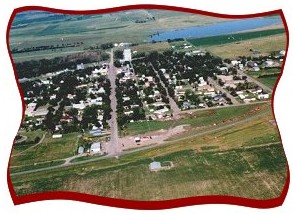
Here's a fun website to visit, which is all about my mother's (and Lawrence Welk's) hometown. As stated on the "church" page of the website, the town's history began when, "In the fall of 1888 men out of Strasburg, South Russia came to this part of Emmons County in search of suitable land for farming. The first settlers, Jacob Feist, Jacob Baumgartner, Johannes Baumgartner, Franz Baumgartner (brothers), Kasper Feist, Joseph Burgad, and Albinus Schneider arrived in the spring of 1889."
Jacob Feist is my great-grandfather.
Warning: polka music plays on the home page! (with animation, too!) Make sure your volume is on.
As my dad says, "There's no such thing as an unhappy polka."

Tuesday, April 12, 2005
The Borzoi Reader
Knopf sends out a poem-a-day email to commemorate National Poetry Month, and today was Wallace Stevens. I particularly liked the virtual walking tour of Hartford, tracing Wallace's daily walks.
One really fun feature of The Knopf Poetry Center website is that you can send really cool e-cards with poems and the poet's picture. They even have one of my favorite Franz Wright poems!
One really fun feature of The Knopf Poetry Center website is that you can send really cool e-cards with poems and the poet's picture. They even have one of my favorite Franz Wright poems!

Monday, April 11, 2005


Northwest Runner
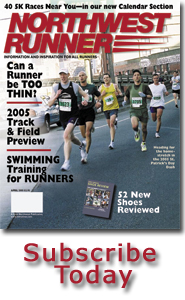
April issue - page 29, "2005 Track and Field Preview: High School" . . . pg. 30-31 features the three profiles I wrote on Becca Noble, Laef Barnes, and Megan O'Reilly. www.nwrunner.com
Sunday, April 10, 2005
Reading Poetry & Writing Nonfiction
With two sore knees, the left worse than the right, and some achey hips as well, today is devoted to reading. Yesterday's geocache hike in Liberty Lake with some friends was very fun, however. Emerson loved it, as well, like he always does. (Judd and I found this easy geocache on my birthday.)
Today I'm enjoying spending time with Frank Bidart. At first, I wasn't too sure about his poems in his book, In the Western Night: Collected Poems 1965-1990. Jonathan recommended him to me because of the way Bidart uses typography, punctuation, and line layout like a screenplay, to direct the reading of his voices, to really clarify the tone, volume, and inflection (and thus, implied meaning) of his poems. Words in CAPS abound, as well as the use of dashes, elipses, parentheses, and semicolons. (The latter being something Richard Hugo highly disapproved of..."No semicolons. Semicolons indicate relationships that only idiots need defined by punctuation. Besides, they are ugly." - from Triggering Town, page 40 - Chapter 6, "Nuts and Bolts")
But after I started getting further into Bidart's book of poems, I better understood the format and intentions, and as I got better used to how Bidart writes and structures his poems, it was less foreign and I became more comfortable with them. I knew how to "read" his turns and techniques. I don't think I'm bold enough to start trying out CAPS (and the yelling voice that's implied) in my poems, but Bidart reaffirms that it's okay to still use the occasional italics and exclamation point to accentuate a voice or line of dialogue.
I'm also reading Joan Didion's nonfiction book Slouching Towards Bethlehem for my Nonfiction Form & Theory class, which I love. This class is a refreshing change from poetry, and I've always been interested in learning more about nonfiction writing. This class is meeting all my needs, in regards to introducing new knowlege, engaging texts to read, fascinating discussions and learning from my professor and classmates, and the in-class writing exercises that Natalie asks us to do. Jeremy wrote about our last class on April 7th. I volunteered to share what I wrote during our 20 or so minutes of writing time. I passed on the Wild Turkey.
The task: think of some realm, some group of people, some collective of which we have insider knowledge, and write about that in an effort to talk about some larger meaning.
My essay (at least the beginning of one):
Once a month on a Wednesday afternoon was the required faculty meeting. I usually never looked forward to these with authentic excitement. I would have rather used the time to get some much-needed grading done or left the school precisely at 3:05 p.m.—thirty minutes after the sixth period bell, the official end of the teacher workday.
By law, we teachers had to attend these meetings. Unless there was a very legitimate reason for not attending (such as being a coach and with after school practice to supervise), and only if there wasn’t an alternative morning meeting to attend, was a teacher really formally excused. Of course, sick days were always a good reason to miss one of these meetings. Therefore, the second Wednesday of the month was always a good day for using one of the twelve allotted teacher sick days of the year.
I usually took my time walking to the school library, always the designated setting for these meetings. I would first stop at the women’s faculty restroom for the necessary relief, sometimes my only pit stop of the day if I had a particularly hectic lunch break or planning period. The one thing I enjoyed most was the “field trip walk” in the hallway with my 2nd floor colleagues, as if we were finally happily released from our classroom prisons and given permission to socialize freely while still technically on the clock.
High school staff meetings at my school were a bit more exciting than the average suburban high school. At least that’s what I gathered from my friends who taught at other schools, in other districts. It wasn’t uncommon to have raised voices, people walking out, sarcastic comments flying across the room, and even arguing at our staff meetings. When I found out what my friends did at their staff meetings, I realized life could be worse—staff meetings could be long and boring.
My staff was a pleasant mix of young, mid-career, and old blood. One was considered a “new teacher” if under the age of 30 or with less than three years of teaching experience. The veteran faculty had been teaching for 15, 20, 25, even 30-plus years at this one school. Tom, my English department head, had been there so long he starting having second and third generation of students.
These veterans were brash, tough, defensive, non-bull shitters who were skeptical of the administrators—who generally rotated in and out of the school every few years, at least the assistant principals came and went more frequently. And these veterans were all people I admired. They defended us new teachers like we were their own flesh and blood.
And everyone knew who really held the power in that school, whose opinion really mattered most. Tom, Chuck from Social Studies, Helen from the Business department, Sue (also English, who was known for her occasional emotional outbursts and confessionals), Derek and Sharon (also English teachers). In fact, it was really the English Department who were the major renegades. Freethinkers, articulate debaters, argumentative (but always right), creative, and ultimately a subversive bunch—mainly due to Tom’s guidance and leadership.
Tom was a true gentleman, in addition to being a strong head honcho who stuck to his guns. He was a poet, a father, and our sugar daddy of sorts. He was known for his gentle compliments. “That’s a lovely gown you’re wearing today,” was commonly expressed whenever I wore a skirt or dress of any sort, instead of my usually khakis or nice jeans. Tom treated everyone with grace and respect, unless someone was really a jerk. But even then he was never mean to anyone, always gave people some form of quiet respect even when the weren’t deserving of it and even when they never showed respect to the rest of the staff.
Other departments, like Science, liked to roll their eyes at the English teachers. More than once you could hear a sigh or tsk of the tongue, when an English teacher spoke up at a meeting. They didn’t care for or even understand the importance of a passionate plea or speech during faculty meetings. They thought we were just a bunch of hippy poets or Thoreau activists. But really we just saw all the bullshit much clearer than everyone else.
After all, we English teachers were the ones who always had to proctor the state assessment tests, give the AIDS education speech to our students, help the kids with their registration each spring, refer kids to the counselors when they wrote suicidal poetry and turned them in as class assignments. And since our department had the highest failure rate, we also got the most heat.
“Don’t lower standards. Keep high expectations.” This was the rallying cry coming down from the district office and our principal. Then out the other side was the criticism, “Why are so many students failing English? What are you guys doing in your classes anyway?”
We all knew our failure rate was because our students were generally unmotivated and unskilled. They couldn’t read. They hated writing. They cared more about pot, their after school jobs, their cars, anything other than schoolwork and the education process. Or they had really hard home situations that made schoolwork one of the lesser priorities in their stressful lives. The Honors and AP classes were a totally different story. Those classes were the only ones who even closely resembled the ideal students, those imagined scenarios that university teacher-education programs prepared us for.
However, the district office and School Board kept blaming our school’s overall low achievement on the faculty—saying we were poor teachers. Or they blamed it on certain groups of kids, like the ESL or Special Ed kids (who were bringing down our collective image and achievement scores), or the “apartment kids” got the blame. (Never mind the district for revising the school boundaries so that a disproportionate number of apartment complexes fed into our high school so that we statistically had a much greater number of transient, low-income families versus our country club, new home development neighborhood populated rival high schools.)
Anyway, these faculty meetings were really just an excuse to make us to something—the whole conformity factor that so much of the American public school system depends on. It was like the absurd trend of making Fridays “School Spirit” day and asking staff to wear school colors and mascot t-shirts. We weren’t high school students anymore, this was our job.
Today I'm enjoying spending time with Frank Bidart. At first, I wasn't too sure about his poems in his book, In the Western Night: Collected Poems 1965-1990. Jonathan recommended him to me because of the way Bidart uses typography, punctuation, and line layout like a screenplay, to direct the reading of his voices, to really clarify the tone, volume, and inflection (and thus, implied meaning) of his poems. Words in CAPS abound, as well as the use of dashes, elipses, parentheses, and semicolons. (The latter being something Richard Hugo highly disapproved of..."No semicolons. Semicolons indicate relationships that only idiots need defined by punctuation. Besides, they are ugly." - from Triggering Town, page 40 - Chapter 6, "Nuts and Bolts")
But after I started getting further into Bidart's book of poems, I better understood the format and intentions, and as I got better used to how Bidart writes and structures his poems, it was less foreign and I became more comfortable with them. I knew how to "read" his turns and techniques. I don't think I'm bold enough to start trying out CAPS (and the yelling voice that's implied) in my poems, but Bidart reaffirms that it's okay to still use the occasional italics and exclamation point to accentuate a voice or line of dialogue.
I'm also reading Joan Didion's nonfiction book Slouching Towards Bethlehem for my Nonfiction Form & Theory class, which I love. This class is a refreshing change from poetry, and I've always been interested in learning more about nonfiction writing. This class is meeting all my needs, in regards to introducing new knowlege, engaging texts to read, fascinating discussions and learning from my professor and classmates, and the in-class writing exercises that Natalie asks us to do. Jeremy wrote about our last class on April 7th. I volunteered to share what I wrote during our 20 or so minutes of writing time. I passed on the Wild Turkey.
The task: think of some realm, some group of people, some collective of which we have insider knowledge, and write about that in an effort to talk about some larger meaning.
My essay (at least the beginning of one):
Once a month on a Wednesday afternoon was the required faculty meeting. I usually never looked forward to these with authentic excitement. I would have rather used the time to get some much-needed grading done or left the school precisely at 3:05 p.m.—thirty minutes after the sixth period bell, the official end of the teacher workday.
By law, we teachers had to attend these meetings. Unless there was a very legitimate reason for not attending (such as being a coach and with after school practice to supervise), and only if there wasn’t an alternative morning meeting to attend, was a teacher really formally excused. Of course, sick days were always a good reason to miss one of these meetings. Therefore, the second Wednesday of the month was always a good day for using one of the twelve allotted teacher sick days of the year.
I usually took my time walking to the school library, always the designated setting for these meetings. I would first stop at the women’s faculty restroom for the necessary relief, sometimes my only pit stop of the day if I had a particularly hectic lunch break or planning period. The one thing I enjoyed most was the “field trip walk” in the hallway with my 2nd floor colleagues, as if we were finally happily released from our classroom prisons and given permission to socialize freely while still technically on the clock.
High school staff meetings at my school were a bit more exciting than the average suburban high school. At least that’s what I gathered from my friends who taught at other schools, in other districts. It wasn’t uncommon to have raised voices, people walking out, sarcastic comments flying across the room, and even arguing at our staff meetings. When I found out what my friends did at their staff meetings, I realized life could be worse—staff meetings could be long and boring.
My staff was a pleasant mix of young, mid-career, and old blood. One was considered a “new teacher” if under the age of 30 or with less than three years of teaching experience. The veteran faculty had been teaching for 15, 20, 25, even 30-plus years at this one school. Tom, my English department head, had been there so long he starting having second and third generation of students.
These veterans were brash, tough, defensive, non-bull shitters who were skeptical of the administrators—who generally rotated in and out of the school every few years, at least the assistant principals came and went more frequently. And these veterans were all people I admired. They defended us new teachers like we were their own flesh and blood.
And everyone knew who really held the power in that school, whose opinion really mattered most. Tom, Chuck from Social Studies, Helen from the Business department, Sue (also English, who was known for her occasional emotional outbursts and confessionals), Derek and Sharon (also English teachers). In fact, it was really the English Department who were the major renegades. Freethinkers, articulate debaters, argumentative (but always right), creative, and ultimately a subversive bunch—mainly due to Tom’s guidance and leadership.
Tom was a true gentleman, in addition to being a strong head honcho who stuck to his guns. He was a poet, a father, and our sugar daddy of sorts. He was known for his gentle compliments. “That’s a lovely gown you’re wearing today,” was commonly expressed whenever I wore a skirt or dress of any sort, instead of my usually khakis or nice jeans. Tom treated everyone with grace and respect, unless someone was really a jerk. But even then he was never mean to anyone, always gave people some form of quiet respect even when the weren’t deserving of it and even when they never showed respect to the rest of the staff.
Other departments, like Science, liked to roll their eyes at the English teachers. More than once you could hear a sigh or tsk of the tongue, when an English teacher spoke up at a meeting. They didn’t care for or even understand the importance of a passionate plea or speech during faculty meetings. They thought we were just a bunch of hippy poets or Thoreau activists. But really we just saw all the bullshit much clearer than everyone else.
After all, we English teachers were the ones who always had to proctor the state assessment tests, give the AIDS education speech to our students, help the kids with their registration each spring, refer kids to the counselors when they wrote suicidal poetry and turned them in as class assignments. And since our department had the highest failure rate, we also got the most heat.
“Don’t lower standards. Keep high expectations.” This was the rallying cry coming down from the district office and our principal. Then out the other side was the criticism, “Why are so many students failing English? What are you guys doing in your classes anyway?”
We all knew our failure rate was because our students were generally unmotivated and unskilled. They couldn’t read. They hated writing. They cared more about pot, their after school jobs, their cars, anything other than schoolwork and the education process. Or they had really hard home situations that made schoolwork one of the lesser priorities in their stressful lives. The Honors and AP classes were a totally different story. Those classes were the only ones who even closely resembled the ideal students, those imagined scenarios that university teacher-education programs prepared us for.
However, the district office and School Board kept blaming our school’s overall low achievement on the faculty—saying we were poor teachers. Or they blamed it on certain groups of kids, like the ESL or Special Ed kids (who were bringing down our collective image and achievement scores), or the “apartment kids” got the blame. (Never mind the district for revising the school boundaries so that a disproportionate number of apartment complexes fed into our high school so that we statistically had a much greater number of transient, low-income families versus our country club, new home development neighborhood populated rival high schools.)
Anyway, these faculty meetings were really just an excuse to make us to something—the whole conformity factor that so much of the American public school system depends on. It was like the absurd trend of making Fridays “School Spirit” day and asking staff to wear school colors and mascot t-shirts. We weren’t high school students anymore, this was our job.
Friday, April 08, 2005
what I am
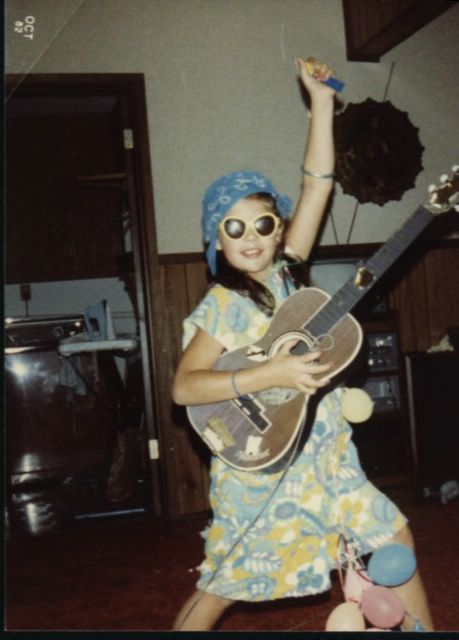
Sanguine Personality type with Powerful Choleric as runner-up (when I'm especially stressed, busy, or motivated I can really see this) ... more about what all this means... and which type I'm marrying (I think...I'll find out for sure tonight!).
Thursday, April 07, 2005
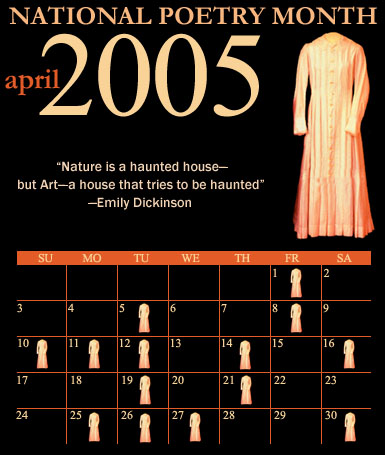
for an MFA poetry student, every month is Poetry month, every week, every day ... and those days that we only seem to take a break from it by not composing or reading something, we're still thinking about it, storing images in our heads and composing in our minds....it never ends until the Thesis Defense...and even after that it will continue on with joy
Wednesday, April 06, 2005
poetry and religion
I've been thinking about the poet Julia Kasdorf, how she's become a voice for the Mennonite community. And I've been thinking about the Pope's death--in an abstract way, as a former Catholic kid who grew up hearing about what Pope John Paul said or did, and how that related to our "faith" and the "Church" and what we were supposed to believe. And I met a guy once who's name was Jon (short for Jonathan) Paul...and I joked that he was named after the Pope...then I found out his dad was really devoutly Catholic, and that yes, indeed he was sort of named after the Pope.
And I came across this interesting article, "Putting Pop Culture Behind the Pulpit."
So I then googled "Poetry and Religion" and found some interesting links to explore...a blog with a poetry book anthology recommendation, some Mars Hill audio sermons, a lit mag website--"Pleiades: A Journal of New Writing" that includes "Christianity and Poetry:A Symposium"...and that was about it for the most interesting stuff.
The back issues of Pleiades sound fascinating...I want to find them and read them. I'll have to see if the Willow Springs reading room has any copies.
And I came across this interesting article, "Putting Pop Culture Behind the Pulpit."
So I then googled "Poetry and Religion" and found some interesting links to explore...a blog with a poetry book anthology recommendation, some Mars Hill audio sermons, a lit mag website--"Pleiades: A Journal of New Writing" that includes "Christianity and Poetry:A Symposium"...and that was about it for the most interesting stuff.
The back issues of Pleiades sound fascinating...I want to find them and read them. I'll have to see if the Willow Springs reading room has any copies.

Tuesday, April 05, 2005

great book
This book was on display at the local library for their little "National Poetry Month" table...and I've really enjoyed it. There's some great new poets in here, well new to me, though the book was published five years ago.
I think Julia Kasdorf might be my new favorite poet. Her poem "Eve's Striptease" is hilarious, beautiful, and filled with surprising imagery. I'm jealous I didn't write it. I just bought two of her poetry books and can't wait for Amazon to deliver them.
Jeffrey McDaniel, James Harms, Allison Joseph (another good link for her), Ann Townsend, and HeidiLynn Nilsson are also wonderful new discoveries for me. I'm very excited to complete my thesis reading list. May the US Postal Service be swift and strong.
I think Julia Kasdorf might be my new favorite poet. Her poem "Eve's Striptease" is hilarious, beautiful, and filled with surprising imagery. I'm jealous I didn't write it. I just bought two of her poetry books and can't wait for Amazon to deliver them.
Jeffrey McDaniel, James Harms, Allison Joseph (another good link for her), Ann Townsend, and HeidiLynn Nilsson are also wonderful new discoveries for me. I'm very excited to complete my thesis reading list. May the US Postal Service be swift and strong.
things I love, things to be thankful for
spring weather, bike rides on the Centennial Trail, barbecue chicken, good wine, daylight savings, guitar playing, worship songs...wedding planning...making plans, making decisions, crossing things off the To Do list...soft rainfall...craft stores, sales at craft stores...chiropractic care...my engagement ring and what it symbolizes...new babies, little girls, nieces, Ellie Jane - 8lbs 13 oz...new poems, newly discovered poets, thesis advisor, non-fiction form and theory class, Get Lit!...love poems, best friends, the color Cranberry, half-price day-old muffins, a newly pregant friend, a freshly laundered t-shirt...All you can eat salad at Olive Garden...spending time with my fiancé
Monday, March 28, 2005
the best high school principal
A friend from college sent me this announcement about the Washington State High School Principal of the Year and I was so happy to learn that Steve Clarke won.
Steve was already on my list of people I would include if I could make my own personalized fantasy faculty/staff for my ideal school to teach at. When I was a senior in college, I lived with the Clarke family--Steve, his wife Julie, and their three young sons who were ages 3-9 at the time. It was my final three months in Bellingham, and I was all done with my coursework and just waiting to student-teach in the upcoming fall/winter quarters. I needed a place to live while I stayed in Bellingham to continue volunteering as a middle school Young Life team leader. During this time, I became really good friends with Julie and Steve. I learned a lot from them, by observing and interacting with their family, and our long conversations together. They taught me about the real-life hard work, truth, and joy of working to create and sustain a real Christian marriage, home, and family--one that is positive, enriching, fruitful. They made such an impact on my life then, and still continue to bless me with their friendship. I haven't been able to visit them in Bellingham since the fall of 2002, but I keep in touch with Julie through email. Their oldest son is graduating from high school this spring and will be attending college in Spokane.
No matter how bad some administrators can be (and I've had a few that really made their staff question their competence, critical thinking skills, common sense, and overall people skills), I always think of Steve to remember there is more than a dark side.
Steve was already on my list of people I would include if I could make my own personalized fantasy faculty/staff for my ideal school to teach at. When I was a senior in college, I lived with the Clarke family--Steve, his wife Julie, and their three young sons who were ages 3-9 at the time. It was my final three months in Bellingham, and I was all done with my coursework and just waiting to student-teach in the upcoming fall/winter quarters. I needed a place to live while I stayed in Bellingham to continue volunteering as a middle school Young Life team leader. During this time, I became really good friends with Julie and Steve. I learned a lot from them, by observing and interacting with their family, and our long conversations together. They taught me about the real-life hard work, truth, and joy of working to create and sustain a real Christian marriage, home, and family--one that is positive, enriching, fruitful. They made such an impact on my life then, and still continue to bless me with their friendship. I haven't been able to visit them in Bellingham since the fall of 2002, but I keep in touch with Julie through email. Their oldest son is graduating from high school this spring and will be attending college in Spokane.
No matter how bad some administrators can be (and I've had a few that really made their staff question their competence, critical thinking skills, common sense, and overall people skills), I always think of Steve to remember there is more than a dark side.
Thursday, March 24, 2005
spring break
My Spring Break is almost over, and tomorrow is Good Friday. My confession: I have not written a new poem this week. In fact, I haven’t done any poetry/thesis work since Sunday. I had a good stack of poetry books I was hoping to get through by now, I wanted to write a new poem a day, I wanted to drink Arabian Mocha Java in the sunshine. But it snowed freakishly overnight on Tuesday and has been cold ever since and I’ve been working every day at my part-time job as a background investigator. Since most of my work is done on the computer, reviewing and revising investigation reports, it kind of burns me out.
I need to read poetry when I’m fresh, not after emerging from pages of employment verifications and derogatory information alerts.
Tomorrow is a day off work, and a day to work again as a writer the whole day, with a few errands and appointments mixed in. I will spend the morning with Elizabeth Bishop's The Complete Poems: 1927-1979.
I’ve also been reading and researching a lot about Alaska for honeymoon travel. I’ve only really explored the Ketchikan area, and my only trip to Anchorage was a day trip for the start of the 2000 Iditarod. (It was a special family thing, since my mom is a certain airline employee.) We’ve got our flight tickets to Anchorage and 7 days to get all the hiking, kayaking, fly fishing, and mt. biking we want to do. If anyone reading this has ever visited Alaska or lived there (or lives there now), please share your recommendations in the comments section. There’s no “Alaska Through the Back Door” book and I want to get a little off the beaten path. We have the Lonely Planet and Frommer’s guidebooks so far.
Even though moose also live in the forests and mountains around Spokane and northern Idaho, Bishop's poem “The Moose" makes me think of Alaska. Except for title, you don’t really get to the moose in the poem until the 23rd stanza…
A moose has come out of
the impenetrable wood
and stands there, looms, rather,
in the middle of the road.
It approaches; it sniffs at
the bus’s hot hood.
Towering, antlerless,
high as a church,
homely as a house
(or, safe as houses).
A man’s voice assures us
“Perfectly harmless . . . .”
Some of the passengers
exclaim in whispers,
childishly, softly,
“Sure are big creatures.”
“It’s awful plain.”
“Look! It’s a she!”
Taking her time,
she looks the bus over,
grand, otherworldly.
Why, why do we feel
(we all feel) this sweet
sensation of joy?
“Curious creatures,”
says our quiet driver,
rolling his r’s.
“Look at that, would you.”
Then he shifts gears.
For a moment longer,
by craning backward,
the moose can be seen
on the moonlit macadam;
then there’s a dim
smell of moose, an acrid
smell of gasoline.
I need to read poetry when I’m fresh, not after emerging from pages of employment verifications and derogatory information alerts.
Tomorrow is a day off work, and a day to work again as a writer the whole day, with a few errands and appointments mixed in. I will spend the morning with Elizabeth Bishop's The Complete Poems: 1927-1979.
I’ve also been reading and researching a lot about Alaska for honeymoon travel. I’ve only really explored the Ketchikan area, and my only trip to Anchorage was a day trip for the start of the 2000 Iditarod. (It was a special family thing, since my mom is a certain airline employee.) We’ve got our flight tickets to Anchorage and 7 days to get all the hiking, kayaking, fly fishing, and mt. biking we want to do. If anyone reading this has ever visited Alaska or lived there (or lives there now), please share your recommendations in the comments section. There’s no “Alaska Through the Back Door” book and I want to get a little off the beaten path. We have the Lonely Planet and Frommer’s guidebooks so far.
Even though moose also live in the forests and mountains around Spokane and northern Idaho, Bishop's poem “The Moose" makes me think of Alaska. Except for title, you don’t really get to the moose in the poem until the 23rd stanza…
A moose has come out of
the impenetrable wood
and stands there, looms, rather,
in the middle of the road.
It approaches; it sniffs at
the bus’s hot hood.
Towering, antlerless,
high as a church,
homely as a house
(or, safe as houses).
A man’s voice assures us
“Perfectly harmless . . . .”
Some of the passengers
exclaim in whispers,
childishly, softly,
“Sure are big creatures.”
“It’s awful plain.”
“Look! It’s a she!”
Taking her time,
she looks the bus over,
grand, otherworldly.
Why, why do we feel
(we all feel) this sweet
sensation of joy?
“Curious creatures,”
says our quiet driver,
rolling his r’s.
“Look at that, would you.”
Then he shifts gears.
For a moment longer,
by craning backward,
the moose can be seen
on the moonlit macadam;
then there’s a dim
smell of moose, an acrid
smell of gasoline.
Thursday, March 17, 2005
Muriel Rekeyser
This past week I've been reading Out of Silence, a book of selected poems by Muriel Rekeyser. Our final class session tonight for Modernism was centered on the discussion of our favorite poems.
Here is one:
Poem
I lived in the first century of world wars.
Most mornings I would be more or less insane,
The newspapers would arrive with their careless stories,
The news would pour out of various devices
Interrupted by attempts to sell products to the unseen.
I would call my friends on other devices;
They would be more or less mad for similar reasons.
Slowly I would get to pen and paper,
Make my poems for others unseen and unborn.
In the day I would be reminded of those men and women
Brave, setting up signals across vast distances,
Considering a nameless way of living, of almost unimagined values. [dropped line]
As the lights darkened, as the lights of night brightened,
We would try to imagine them, try to find each other.
To construct peace, to make love, to reconcile
Waking with sleeping, ourselves with each other,
Ourselves with ourselves. We would try by any means
To reach the limits of ourselves, to reach beyond ourselves,
To let go the means, to wake.
I lived in the first century of these wars.
~ Muriel Rukeyser, from her 1968 book The Speed of Darkness
It's beautiful how we are the "others unseen and unborn" for which she wrote her poems, and we can find solace from her words today, while another war takes place in our world.
Here is one:
Poem
I lived in the first century of world wars.
Most mornings I would be more or less insane,
The newspapers would arrive with their careless stories,
The news would pour out of various devices
Interrupted by attempts to sell products to the unseen.
I would call my friends on other devices;
They would be more or less mad for similar reasons.
Slowly I would get to pen and paper,
Make my poems for others unseen and unborn.
In the day I would be reminded of those men and women
Brave, setting up signals across vast distances,
Considering a nameless way of living, of almost unimagined values. [dropped line]
As the lights darkened, as the lights of night brightened,
We would try to imagine them, try to find each other.
To construct peace, to make love, to reconcile
Waking with sleeping, ourselves with each other,
Ourselves with ourselves. We would try by any means
To reach the limits of ourselves, to reach beyond ourselves,
To let go the means, to wake.
I lived in the first century of these wars.
~ Muriel Rukeyser, from her 1968 book The Speed of Darkness
It's beautiful how we are the "others unseen and unborn" for which she wrote her poems, and we can find solace from her words today, while another war takes place in our world.
Wednesday, March 16, 2005
rain
It's raining tonight in Spokane. I have missed the sound of rain. After growing up in the Puget Sound area, I had become so accustomed to it as a daily bit of weather...rain showers, sprinkles, mist, chance of showers, partly rainy skies, etc...all the ways that Seattlites describe the various degrees of rain like Eskimos have different words for snow. A rainy day is an excuse to curl up inside and read all day. A rainy day is fun for going out for a run, most of the time.
But it rarely rains in Spokane. And it hardly snowed this winter. Everything is brown and dry, dusty, cracked dirt. So this rain is like a bath for everything--my car, the backyard, Emerson's kennel, the sidewalks.
I wish I had a line of poetry about rain memorized and ready on my tongue for times like this. I can think of which books to look in, and I'm sure I have a quote in my journal--but I don't want to have to look for it. So, one of my Spring Break goals will be to memorize my favorite lines of poetry. Naturally, I know some just because of repetitive reading and analysis. But I want to memorize some lines just because they are so damn beautiful. A line about rain just because it contains a perfect language to create an image.
I hope it rains tomorrow, too.
But it rarely rains in Spokane. And it hardly snowed this winter. Everything is brown and dry, dusty, cracked dirt. So this rain is like a bath for everything--my car, the backyard, Emerson's kennel, the sidewalks.
I wish I had a line of poetry about rain memorized and ready on my tongue for times like this. I can think of which books to look in, and I'm sure I have a quote in my journal--but I don't want to have to look for it. So, one of my Spring Break goals will be to memorize my favorite lines of poetry. Naturally, I know some just because of repetitive reading and analysis. But I want to memorize some lines just because they are so damn beautiful. A line about rain just because it contains a perfect language to create an image.
I hope it rains tomorrow, too.
Tuesday, March 15, 2005
the Mountain
My favorite Seattle radio station, 103.7 The Mountain, is now broadcasting online! The weekday 5:00 Attitude Adjustment Hour was one of my favorite times to listen, especially the different 5:20 funny comedian pieces that DJ Marty Riemer played. My English teacher friend Tim (from a different district won tickets once for a Mountain Music Lounge lunch concert w/ Jon Hiatt. He invited me to come along, so we both took a "sick day" (on account of our mental health) and had one great day in Seattle.
Another great online option is 95.3 FM KYRS - Thin Air Community Radio in Spokane. Every Sunday evening at 8:00 their "Spokane Open Poetry" show features a local Spokane poet. MFA poet friends of mine have been featured and I'll be reading this week.
Another great online option is 95.3 FM KYRS - Thin Air Community Radio in Spokane. Every Sunday evening at 8:00 their "Spokane Open Poetry" show features a local Spokane poet. MFA poet friends of mine have been featured and I'll be reading this week.
Sunday, March 13, 2005
what i've been reading lately
- the newest issue of The Inlander
- a library book, The Best American Nonrequired Reading 2004
- my bag of Arabian Mocha Java while waiting for the French Press (this coffee is no longer being roasted and distributed by Starbucks, according to a postcard I picked up at a Seattle store last weekend)
- The Collected Poems of Wallace Stevens
- submissions for Willow Springs
But it's another sunny, blue sky day in the Inland Empire...time for today's run with Emerson. We're going to the Centennial Trail today.
Thursday, March 10, 2005
writer's work
Not often do I get paid for my writing, but I have written a few articles for Northwest Runner magazine, based in Seattle. My first attempt at freelance writing for them was an essay about my experience running the Munich half-marathon in June 1999. But I waited too long to send it in to them--I didn't really know what I was doing. The editor gave me good feedback and liked my writing, so he encouraged me to send more.
My first piece was published in Oct. 2000, and by surprise actually--I happened to pick up the magazine issue at a running story and saw my article inside. I had emailed him a response to an article that talked about the caution required when running with a dog. Some of the ideas were a bit dramatic and inaccurate, I thought, and didn't really work to encourage dog-owners to run with their dogs, or runners to run with their dogs. My piece shared my history of running with my dog and his achievements, but pointing out that because Emerson is a husky he is naturally inclined to be a distance running partner. And since the UW Dawg Dash 5k was coming up, they even put some cute little husky clip art by my article title, along with another reader's response to dog-running.
Since then, I've had published a few first-person articles about my running experiences to highlight the Seattle half-marathon and other Seattle-area races, as well as feature stories--one about longtime HS coach Roger Erickson (the head coach I worked under), a profile about distance runner Carl Moe while he was still a HS senior, and another feature on my friend Tim (one of Carl's coaches) who ran the beautiful 2004 Napa Valley Marathon and qualified for Boston.
It sometimes takes more time than anticipated to write an article, and I only get paid after it's published. Sometimes my efforts don't bring any monetary reward. For example, in spring of 2002, I had written an article about running the LA Marathon (my 2nd marathon experience) but I hated the course and race weather so much that I didn't really much motivation or love for the assignment--but I got a brief, nice-as-I-could-be 500-word article written. But then the editor pushed back the article for a later issue and asked me to double its length. I just couldn't do it, I had nothing else to say about LA (and Tim hated it too). So, I asked my friend Megan (who also ran LA that year) to write about her story--it was her first marathon and she had genuine love for the entire experience.
I have also contributed editing work for my friend Keith's article about the African boys on the high school cross-country team where we both were assistant coaches--a group of blazing fast teenagers who had immigrated from Sudan and Somalia. That team took 3rd place in 2000 and 4th in 2001 at the Washington State XC meet.
A few of my running-related poems have also been published Northwest Runner, and last year I wrote a feature article about Bloomsday and quite a few of the digital pictures that Judd and I took were also included.
Anyway, my most recent "Spokane correspondent" assignment was to write 300-word profiles on two high school runners from Spokane. Today I spoke with both of the kids over the phone, and the articles--though longer than originally planned--are good to go (the editor gave me more page space for the profiles).
My first piece was published in Oct. 2000, and by surprise actually--I happened to pick up the magazine issue at a running story and saw my article inside. I had emailed him a response to an article that talked about the caution required when running with a dog. Some of the ideas were a bit dramatic and inaccurate, I thought, and didn't really work to encourage dog-owners to run with their dogs, or runners to run with their dogs. My piece shared my history of running with my dog and his achievements, but pointing out that because Emerson is a husky he is naturally inclined to be a distance running partner. And since the UW Dawg Dash 5k was coming up, they even put some cute little husky clip art by my article title, along with another reader's response to dog-running.
Since then, I've had published a few first-person articles about my running experiences to highlight the Seattle half-marathon and other Seattle-area races, as well as feature stories--one about longtime HS coach Roger Erickson (the head coach I worked under), a profile about distance runner Carl Moe while he was still a HS senior, and another feature on my friend Tim (one of Carl's coaches) who ran the beautiful 2004 Napa Valley Marathon and qualified for Boston.
It sometimes takes more time than anticipated to write an article, and I only get paid after it's published. Sometimes my efforts don't bring any monetary reward. For example, in spring of 2002, I had written an article about running the LA Marathon (my 2nd marathon experience) but I hated the course and race weather so much that I didn't really much motivation or love for the assignment--but I got a brief, nice-as-I-could-be 500-word article written. But then the editor pushed back the article for a later issue and asked me to double its length. I just couldn't do it, I had nothing else to say about LA (and Tim hated it too). So, I asked my friend Megan (who also ran LA that year) to write about her story--it was her first marathon and she had genuine love for the entire experience.
I have also contributed editing work for my friend Keith's article about the African boys on the high school cross-country team where we both were assistant coaches--a group of blazing fast teenagers who had immigrated from Sudan and Somalia. That team took 3rd place in 2000 and 4th in 2001 at the Washington State XC meet.
A few of my running-related poems have also been published Northwest Runner, and last year I wrote a feature article about Bloomsday and quite a few of the digital pictures that Judd and I took were also included.
Anyway, my most recent "Spokane correspondent" assignment was to write 300-word profiles on two high school runners from Spokane. Today I spoke with both of the kids over the phone, and the articles--though longer than originally planned--are good to go (the editor gave me more page space for the profiles).
- Laef Barnes, from Mead High School, one of the fastest high school milers in the nation and the fastest HS indoor mile runner (according to DyeStat). Man, this kid is nice...articulate, humble, totally fits the cool kid mold which most high school XC boys are. Laef has a fascinating story to tell, so his profile article is over 600 words. He came back from a stress fracture injury last April, no training for 3-1/2 months, to take 4th in last fall's state xc meet and be this national-caliber miler today.
- and Becca Noble from Rogers HS, who excels at distance in xc and on middle distance on the track (400 State champ two years in a row)...she's a really confident, no-nonsense girl, with a full-ride running scholarship to University of Oregon.
So, their profile stories are written in time to go into next month's issue. My day at the "office" is done.
All this is to say that writing for Northwest Runner isn't the most glamorous gig, but it is writing work that gets published. It's a stepping stone to future prospects. So, if anyone reading this has always wanted to get some writing published--start with some local publications. I pursued the magazine because I was a loyal reader of it myself, knew the publication, and was encouraged to start building a portfolio of work by a local newspaper reporter who used to contact me when she needed a "teacher quote" for different stories she was writing about issues occurring in my district (low teacher pay and a 1-day teacher walkout).
I'm heading out to do some editing work for Willow Springs now. And Mindy Aloff is our visiting non-fiction writer tonight.
Wednesday, March 09, 2005
Spirituality & Wallace Stevens
The topic of my Modernism Form & Theory final paper will be the theme of Spirituality in the poems of Wallace Stevens. In addition, I want to compare and contrast how the spiritual imagery and tones are used by other Modern poets in their meditative or narrative lyrics. I'll articulate a more definitive thesis in the next few days.
One aspect of Wallace Stevens that I find extremely fascinating is his writing process. He walked everyday to his job with Hartford Insurance, stopping sometimes along the way to write down notes and ideas on the blank envelopes in his jacket pocket, or he'd wait until he arrived at work and then write down the poem which he had composed in his head. Then he'd give his notes to his secretary to type up. Reportedly, she said once when giving the typed document to Wallace, "I don't know what this means, but here you go." The methodical way he scheduled his life, the daily morning walks, the solitude in his bedroom after dinner (him and his wife kept separate quarters in their house), the precision of a M-F job, his long walks on weekends...all of this helped him to cultivate a meditative lifestyle. To tap into that quiet space inside himself where he could hear his "voice"...his soul even.
Despite his established notoriety today, Wallace Stevens worked on his poetry and publishing career in almost total secrecy from his community. He kept his poems private from his co-workers and was not involved socially in the literary culture and society of his day.
I still have more research to do on Stevens' biography, but from what I've read so far he was not committed to religion, church attendance, and the like. Still, I think Stevens expresses his spirituality through his poems, even a Christ-centered spirituality maybe, without being attached to a specific church or theology.
And here is an interesting article that explores this issue:
Spirituality for All the Wrong Reasons
Eugene Peterson talks about lies and illusions that destroy the church.
One aspect of Wallace Stevens that I find extremely fascinating is his writing process. He walked everyday to his job with Hartford Insurance, stopping sometimes along the way to write down notes and ideas on the blank envelopes in his jacket pocket, or he'd wait until he arrived at work and then write down the poem which he had composed in his head. Then he'd give his notes to his secretary to type up. Reportedly, she said once when giving the typed document to Wallace, "I don't know what this means, but here you go." The methodical way he scheduled his life, the daily morning walks, the solitude in his bedroom after dinner (him and his wife kept separate quarters in their house), the precision of a M-F job, his long walks on weekends...all of this helped him to cultivate a meditative lifestyle. To tap into that quiet space inside himself where he could hear his "voice"...his soul even.
Despite his established notoriety today, Wallace Stevens worked on his poetry and publishing career in almost total secrecy from his community. He kept his poems private from his co-workers and was not involved socially in the literary culture and society of his day.
I still have more research to do on Stevens' biography, but from what I've read so far he was not committed to religion, church attendance, and the like. Still, I think Stevens expresses his spirituality through his poems, even a Christ-centered spirituality maybe, without being attached to a specific church or theology.
And here is an interesting article that explores this issue:
Spirituality for All the Wrong Reasons
Eugene Peterson talks about lies and illusions that destroy the church.
Tuesday, March 08, 2005
Sweeeeeet!

You are Pedro; you make my wildest dreams come true. You are, in essence, my idea of the perfect day.
JunkmailforIdolatry
brought to you by Quizilla

You are Deb and you could drink whole milk if you wanted.
Which Napoleon Dynamite character are you?
brought to you by Quizilla
Monday, March 07, 2005
long weekend, busy Monday
The Christopher Williams concert in Seattle was amazing. His newest CD has the most beautiful lyrics yet, I think. It's full of meditative songs (somewhat like lyric poems), blended with slight narrative (storytelling), along with vivid details and images that capture the emotion of the moment. His songs are lyrically beautiful, rich with language and the use of rhyme (not always so obvious) to create cohesion. His live acoustic guitar playing and improvisation, djembe drum skills, and harmonica playing (some serious multi-tasking while playing guitar) make for a memorable concert. He plays and sings with great intensity and passion, visible in his face when experienced live. He's funny, entertaining, amicable, and friendly--a genuine good man. If you live near one of his upcoming concert cities, you should make an effort to see him. (A quick summary from a more objective source.)
Friday, March 04, 2005
to be a wife
Lately, I've been reading As For Me And My House: Crafting A Marriage To Last by Walter Wangerin, Jr. It's opened my eyes to the enormous responsibility that marriage really is. I always knew it required a lot of selfless work, sacrifice, forgiveness, etc...but this book puts it in a more realistic framework and really gets at the heart of what it takes to create a Christ-centered marriage that seeks the greater good in your spouse. (Another link about Walter and an interesting booklist.)
But it's also a little scary. Marriage is a wonderful covenant, a blessing, and I'm looking forward to the challenge and joy of being a wife. Although it's a tremendous honor, the great responsibility and expectations are also a bit scary because there will be failure on both our parts. I realize my weaknesses and limitations, I only wish I could be mistake-proof.
I really want to be a good wife. In fact, my internal image and definition of "wife" is, I'm sure, above the national standard. To be a wife, in my book, is not taken lightly. There is no 60% pass rate. It's a big role to fill.
I considered myself a pretty good girlfriend. I'm not high-maintenance, I'm not afraid to get dirty and go backpacking in the woods...in fact, outdoor recreation adventures are my favorite type of dates. I create handmade cards, write sweet notes, cheesy poems for my love, make him dinner, and do all those sentimental things that express my love. I give him his space, try not to nag or whine or be moody...though he understands our gender differences and my emotional sensitivities and needs.
But I also get to still have my own space--my own down comforter, my fruity smelling lotions and candles (even those that resemble mango or canteloupe), my stacks of books everywhere, poem rough drafts on the floor, art projects half put away. But this loss of space, or rather "change" is not really a big deal. After thirty years, I'm looking forward to a permanent roommate!
Being a fiancee is that in-between stage, where we can really start talking about our future dreams instead of hypotheticals. But wedding planning, thesis writing, and the daily toil of living on opposite sides of the city take a bit of the cloud-nine glamour out of being engaged.
Lately, I've been realizing at a deeper level what kind of power both of us have to create our marriage into what it will be, along with God's grace and guidance. My mood, my actions, my words can work to create a loving home and marriage...or one that can be broken by sparks and criticism, disappointment and insecurities.
I found this article (written by a woman) very refreshing. Here's an excerpt:
Young people, many bearing the scars of growing up in broken homes, long for one partner who will be a “soulmate.” So they wait for That One Perfect Person to stride into Starbucks. And they wait … and wait …
I applaud their desire for a strong and lasting marriage. But I’m not sure about this soulmate business. I fear their bright illusions will dissolve into dust the first time they have an argument about money or when she loses her job or he gets sick or either of them decides he or she wants to go to a different church. Even we spouses who are united in Christ have evenings when we just don’t have much to say to each other, those times when we think, Why does he have to be like this? Soulmates always instinctively understand each other. Real marriage partners don’t.
But real marriage partners try. And this is where we expect too little of marriage. Because a marriage wholly yielded to Christ can astonish us. Or, more precisely, God’s work in that marriage can astonish.
I used to believe in that soulmate fantasy. Maybe I still do. What I do know is that Judd is perfect for me. He's patient when I'm anxious, is goofy when I'm being too serious and need to lighten up, is an example of kindness when I want to tell someone what I really think, pays more attention to the little details while I view the big picture, lets me plan a date while he makes sure we get there on time. I knew I would someday fall in love with a man who cares how the toothpaste container gets squeezed. We bring such different, but fun and loving perspectives and ideas into each other's lives.
Unfortunately, I know we won't be perfect as husband and wife. I will be disappointed in myself, and him, each time we fail--or rather, fail to live up to our expectations. We both realize that marriage requires very hard work . . . a conscientious, diligent, focused effort to stay faithful in all things (according to Wangerin's book). We feel prepared for the challenge. Our dating relationship has not been without its challenges--the balance of time spent together vs. time apart; coordinating the demands of school, work and love; dealing with external events (car getting stolen! new job, new place to live, health issues, husky escaping from the yard at night!). We look forward to all the future obstacles and challenges...our own lifelong Amazing Race together, where we learn to navigate the journey together, try not to lose our cool, and always remember to have fun, laugh, smile, and keep love as number one.
So, what does this have to do with writing? Well, being a writer permeates my entire being and as such, my poetry reflects (if not directly, at least indirectly) my beliefs about the world, the people I love, the places I've been, and my overall thoughts, ideas, and values.
At the same time, I also use characters (personas) to reflect other ideas about the world and how I see it. And by no means is my poetry confessional. I'm long past those days of high school poetry which were one step away from Anne Sexton's heart-wrenching open sores.
But love...the idea of it, the actualy being in love, the whole thing...it's a great spark for the muse.
Raymond Carver knew this . . .
Cherish
From the window I see her bend to the roses
holding close to the bloom so as not to
prick her fingers. With the other hand she clips, pauses and
clips, more alone in the world
than I had known. She won't
look up, not now. She's alone
with roses and with something else I can only think, not
say. I know the names of those bushes
given for our late wedding: Love, Honor, Cherish--
this last the rose she holds out to me suddenly, having
entered the house between glances. I press
my nose to it, draw the sweetness in, let it cling--scent
of promise, of treasure. My hand on her wrist to bring her close,
her eyes green as river-moss. Saying it then, against
what comes: wife, while I can, while my breath, each hurried petal
can still find her.
My future husband won't be writing anything like this, but he does write the occasionally brief, romantic, image-driven note or a whimsical, funny poem, full of rhyming couplets. These make me laugh and stir me to say "yes" again.
But it's also a little scary. Marriage is a wonderful covenant, a blessing, and I'm looking forward to the challenge and joy of being a wife. Although it's a tremendous honor, the great responsibility and expectations are also a bit scary because there will be failure on both our parts. I realize my weaknesses and limitations, I only wish I could be mistake-proof.
I really want to be a good wife. In fact, my internal image and definition of "wife" is, I'm sure, above the national standard. To be a wife, in my book, is not taken lightly. There is no 60% pass rate. It's a big role to fill.
I considered myself a pretty good girlfriend. I'm not high-maintenance, I'm not afraid to get dirty and go backpacking in the woods...in fact, outdoor recreation adventures are my favorite type of dates. I create handmade cards, write sweet notes, cheesy poems for my love, make him dinner, and do all those sentimental things that express my love. I give him his space, try not to nag or whine or be moody...though he understands our gender differences and my emotional sensitivities and needs.
But I also get to still have my own space--my own down comforter, my fruity smelling lotions and candles (even those that resemble mango or canteloupe), my stacks of books everywhere, poem rough drafts on the floor, art projects half put away. But this loss of space, or rather "change" is not really a big deal. After thirty years, I'm looking forward to a permanent roommate!
Being a fiancee is that in-between stage, where we can really start talking about our future dreams instead of hypotheticals. But wedding planning, thesis writing, and the daily toil of living on opposite sides of the city take a bit of the cloud-nine glamour out of being engaged.
Lately, I've been realizing at a deeper level what kind of power both of us have to create our marriage into what it will be, along with God's grace and guidance. My mood, my actions, my words can work to create a loving home and marriage...or one that can be broken by sparks and criticism, disappointment and insecurities.
I found this article (written by a woman) very refreshing. Here's an excerpt:
Young people, many bearing the scars of growing up in broken homes, long for one partner who will be a “soulmate.” So they wait for That One Perfect Person to stride into Starbucks. And they wait … and wait …
I applaud their desire for a strong and lasting marriage. But I’m not sure about this soulmate business. I fear their bright illusions will dissolve into dust the first time they have an argument about money or when she loses her job or he gets sick or either of them decides he or she wants to go to a different church. Even we spouses who are united in Christ have evenings when we just don’t have much to say to each other, those times when we think, Why does he have to be like this? Soulmates always instinctively understand each other. Real marriage partners don’t.
But real marriage partners try. And this is where we expect too little of marriage. Because a marriage wholly yielded to Christ can astonish us. Or, more precisely, God’s work in that marriage can astonish.
I used to believe in that soulmate fantasy. Maybe I still do. What I do know is that Judd is perfect for me. He's patient when I'm anxious, is goofy when I'm being too serious and need to lighten up, is an example of kindness when I want to tell someone what I really think, pays more attention to the little details while I view the big picture, lets me plan a date while he makes sure we get there on time. I knew I would someday fall in love with a man who cares how the toothpaste container gets squeezed. We bring such different, but fun and loving perspectives and ideas into each other's lives.
Unfortunately, I know we won't be perfect as husband and wife. I will be disappointed in myself, and him, each time we fail--or rather, fail to live up to our expectations. We both realize that marriage requires very hard work . . . a conscientious, diligent, focused effort to stay faithful in all things (according to Wangerin's book). We feel prepared for the challenge. Our dating relationship has not been without its challenges--the balance of time spent together vs. time apart; coordinating the demands of school, work and love; dealing with external events (car getting stolen! new job, new place to live, health issues, husky escaping from the yard at night!). We look forward to all the future obstacles and challenges...our own lifelong Amazing Race together, where we learn to navigate the journey together, try not to lose our cool, and always remember to have fun, laugh, smile, and keep love as number one.
So, what does this have to do with writing? Well, being a writer permeates my entire being and as such, my poetry reflects (if not directly, at least indirectly) my beliefs about the world, the people I love, the places I've been, and my overall thoughts, ideas, and values.
At the same time, I also use characters (personas) to reflect other ideas about the world and how I see it. And by no means is my poetry confessional. I'm long past those days of high school poetry which were one step away from Anne Sexton's heart-wrenching open sores.
But love...the idea of it, the actualy being in love, the whole thing...it's a great spark for the muse.
Raymond Carver knew this . . .
Cherish
From the window I see her bend to the roses
holding close to the bloom so as not to
prick her fingers. With the other hand she clips, pauses and
clips, more alone in the world
than I had known. She won't
look up, not now. She's alone
with roses and with something else I can only think, not
say. I know the names of those bushes
given for our late wedding: Love, Honor, Cherish--
this last the rose she holds out to me suddenly, having
entered the house between glances. I press
my nose to it, draw the sweetness in, let it cling--scent
of promise, of treasure. My hand on her wrist to bring her close,
her eyes green as river-moss. Saying it then, against
what comes: wife, while I can, while my breath, each hurried petal
can still find her.
My future husband won't be writing anything like this, but he does write the occasionally brief, romantic, image-driven note or a whimsical, funny poem, full of rhyming couplets. These make me laugh and stir me to say "yes" again.
Wednesday, March 02, 2005
what William Carlos Williams had to say...
"The thing has been with me to work the language in order to find what new may be done with it."
"Poetry should be brought into the world where we live and not be so recondite, so removed from people."
he wanted his poetry to "refine, to clarify, to intensify that eternal moment in which we alone live."
he considered art to be a form or action...the "artist must possess his world, live in it, take responsibility for it, and use it for his imaginative pleasure"...art should be an "addition to nature"
I'm still researching what Williams said and felt as a poet...meanwhile, here are some of my favorite lines and images from his poetry.
"Your thighs are appletrees / whose blossoms touch the sky." - from "Portrait of a Lady"
"It is difficult / to get the news from poems / yet men die miserably every day / for lack / of what is found there." - from "Asphodel, That Greeny Flower"
"Now the grass, tomorrow / the stiff curl of wildcarrot leaf" - from "Spring and All"
And one of my favorite Williams poems, it makes me smile everytime (in addition to his poem, "This Is Just To Say").
Danse Russe
If I when my wife is sleeping
and the baby and Kathleen
are sleeping
and the sun is a flame-white disc
in silken mists
above shining trees,--
if I in my north room
dance naked, grotesquely
before my mirror
waving my shirt round my head
and singing softly to myself:
"I am lonely, lonely,
I was born to be so lonely.
I am best so!"
If I admire my arms, my face
my shoulders, flanks, buttocks
against the yellow drawn shades,--
who shall say I am not
the happy genius of my household?
"Poetry should be brought into the world where we live and not be so recondite, so removed from people."
he wanted his poetry to "refine, to clarify, to intensify that eternal moment in which we alone live."
he considered art to be a form or action...the "artist must possess his world, live in it, take responsibility for it, and use it for his imaginative pleasure"...art should be an "addition to nature"
I'm still researching what Williams said and felt as a poet...meanwhile, here are some of my favorite lines and images from his poetry.
"Your thighs are appletrees / whose blossoms touch the sky." - from "Portrait of a Lady"
"It is difficult / to get the news from poems / yet men die miserably every day / for lack / of what is found there." - from "Asphodel, That Greeny Flower"
"Now the grass, tomorrow / the stiff curl of wildcarrot leaf" - from "Spring and All"
And one of my favorite Williams poems, it makes me smile everytime (in addition to his poem, "This Is Just To Say").
Danse Russe
If I when my wife is sleeping
and the baby and Kathleen
are sleeping
and the sun is a flame-white disc
in silken mists
above shining trees,--
if I in my north room
dance naked, grotesquely
before my mirror
waving my shirt round my head
and singing softly to myself:
"I am lonely, lonely,
I was born to be so lonely.
I am best so!"
If I admire my arms, my face
my shoulders, flanks, buttocks
against the yellow drawn shades,--
who shall say I am not
the happy genius of my household?
Tuesday, March 01, 2005
what Wallace Stevens said...
"Poetry is a passion, not a habit."
"If each of us is a biological mechanism, each poet is a poetic mechanism."
"The poet, in moments of exceptional concentration, sometimes experiences an automatism in which the poem writes itself."
"Ideas of real force don't occur to one every day. Besides, I want my poetry to grow out of something more than my inkwell."
"Every poem is a poem within a poem: the poem of the idea within the poem of the words."
"Words are thoughts and not only our own thoughts but the thoughts of men and women ignorant of what it is that they are thinking."
"Poetry is the subject of the poem."
"When we find in poetry that which gives us a momentary existence on an exquisite plane, is it necessary to ask the meaning of the poem?"
"If each of us is a biological mechanism, each poet is a poetic mechanism."
"The poet, in moments of exceptional concentration, sometimes experiences an automatism in which the poem writes itself."
"Ideas of real force don't occur to one every day. Besides, I want my poetry to grow out of something more than my inkwell."
"Every poem is a poem within a poem: the poem of the idea within the poem of the words."
"Words are thoughts and not only our own thoughts but the thoughts of men and women ignorant of what it is that they are thinking."
"Poetry is the subject of the poem."
"When we find in poetry that which gives us a momentary existence on an exquisite plane, is it necessary to ask the meaning of the poem?"
Subscribe to:
Posts (Atom)