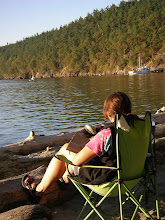
"When I'm writing, I know I'm doing the thing I was born to do." - Anne Sexton
Welcome Morning
There is joy
in all:
in the hair I brush each morning,
in the Cannon towel, newly washed,
that I rub my body with each morning,
in the chapel of eggs I cook
each morning,
in the outcry from the kettle
that heats my coffee
each morning,
in the spoon and the chair
that cry “hello there, Anne”
each morning,
in the godhead of the table
that I set my silver, plate, cup upon
each morning.
All this is God,
right here in my pea-green house
each morning
and I mean,
though often forget,
to give thanks,
to faint down by the kitchen table
in a prayer of rejoicing
as the holy birds at the kitchen window
peck into their marriage of seeds.
So while I think of it,
let me paint a thank-you on my palm
for this God, this laughter of the morning,
lest it go unspoken.
The Joy that isn’t shared, I’ve heard, dies young.
- Anne Sexton
* * *
"Welcome Morning", from her 1975 book The Awful Rowing Toward God (published after her death) illustrates a compelling facet of Sexton's persona which contradicts the dominant memory of her poetic life--depression and suicide. This poem is full of hope, light, sincere thankfulness for her moments of joy; the tactile sensations that gave Anne pleasure and peace. I am filled with a sense of grief for the inner turmoil she endured before and after this poem was composed. I think anyone who suffers from depression should post this by her bed and read it in the morning upon waking, that sometimes most difficult time of the day. To remember the hope. And consider her own personal reasons for giving thanks.
I'm going to read this poem at next month's reading to celebrate Women's History Month. It will take place at The Empyrean Coffee House in Spokane, and is being organized by some of my MFA alumni poet friends. Each reader will first read a poem or two published by prominent female poets, and then some of her/his own original work.
If you live in or near Spokane, you should come. Saturday, March 18 @ 7:00 p.m.
Sunday, February 19, 2006
Friday, February 17, 2006
on the brain
Education-related subjects have been the substance of recent posts, which is an obvious sign that I'm not spending enough time in the realm of poetry. I can't help it. I am fascinated by Joe Williams's book Cheating Our Kids: How Politics and Greed Ruin Education. It feels so subversive to read it during the "prep periods" while substitute teaching. I love that. It's like I'm reading under the antagonist's nose. Well, not really. Williams's main focus is about the corruption and problems of America's largest urban school districts. His case examples have been with New York City, LA, San Diego, St. Louis, and Milwaukee mainly. As an education reportor, he lived/worked in Milwaukee, and now is in NY (and his sons attend its public schools). He asserts that parents who exercise choice for their children's education will choose either a private school, charter school (if that option exists), or--depending on the financial means of the family--move to the suburbs.
What Williams assumes is that the suburbs, simply because they are not so big and urban, are better school district systems. I believe that there is still excessive and unnecessary administrative systems and expenditures that have little or no direct impact on children--neither the instruction and learning process, or the overall classroom/school experience. For example, how many assistants are really needed in each department at the District office? Go to a district's home page and search the district personnel listings and you may find for one administrative department all of the following: Project Manager, Coordinator, Project Supervisor, and Project Assistants.
There's a lot I agree with in his book. In fact, most of it. I just makes sense, and he has convincing proof and citations. I wonder if the NEA has commented on this book yet?
Enough serious reading.
* * *
Back to Poetry . . .
On the literary bookshelf now: Appalachia by Charles Wright - a recommended/loaned book of poems from a member of my monthly poetry workshop group.
Indulgent Reading
Just borrowed from a friend, but haven't started: Harry Potter book 6 - Will this be 600+ pages of entertaining distraction when I could be reading and writing poetry?
From the library, but haven't started yet: Angela's Ashes - I started it years ago, when it was still the hot book to read; however, I just couldn't sustain interest for whatever reasons at that time. But since reading McCourt's Teacher Man, I now have a greater intrinsic desire to read his first memoir (and not just read because it's literary and everyone else has read it).
* * *
Advice for job seeking (esp. for college teaching) - when not to have a blog, or admit to it..or in other words, how blogging could hurt your career.
* * *
favorite food of the week: steamed white rice with cilantro
how to eat it: wrapped in a wheat tortilla with mozzarella cheese, lettuce, salsa, and guacamole ...easy to eat while reading online articles.
* * *
State of the Laptop: faded letters - d (gone, totally); c (mostly); v, n, s (partially extinct); m (endangered). Wazzup wit dat, Dell?
What Williams assumes is that the suburbs, simply because they are not so big and urban, are better school district systems. I believe that there is still excessive and unnecessary administrative systems and expenditures that have little or no direct impact on children--neither the instruction and learning process, or the overall classroom/school experience. For example, how many assistants are really needed in each department at the District office? Go to a district's home page and search the district personnel listings and you may find for one administrative department all of the following: Project Manager, Coordinator, Project Supervisor, and Project Assistants.
There's a lot I agree with in his book. In fact, most of it. I just makes sense, and he has convincing proof and citations. I wonder if the NEA has commented on this book yet?
Enough serious reading.
* * *
Back to Poetry . . .
On the literary bookshelf now: Appalachia by Charles Wright - a recommended/loaned book of poems from a member of my monthly poetry workshop group.
Indulgent Reading
Just borrowed from a friend, but haven't started: Harry Potter book 6 - Will this be 600+ pages of entertaining distraction when I could be reading and writing poetry?
From the library, but haven't started yet: Angela's Ashes - I started it years ago, when it was still the hot book to read; however, I just couldn't sustain interest for whatever reasons at that time. But since reading McCourt's Teacher Man, I now have a greater intrinsic desire to read his first memoir (and not just read because it's literary and everyone else has read it).
* * *
Advice for job seeking (esp. for college teaching) - when not to have a blog, or admit to it..or in other words, how blogging could hurt your career.
* * *
favorite food of the week: steamed white rice with cilantro
how to eat it: wrapped in a wheat tortilla with mozzarella cheese, lettuce, salsa, and guacamole ...easy to eat while reading online articles.
* * *
State of the Laptop: faded letters - d (gone, totally); c (mostly); v, n, s (partially extinct); m (endangered). Wazzup wit dat, Dell?
Tuesday, February 14, 2006
more, amour
LOVE SONG (SMELT)
When I say 'you' in my poems, I mean you.
I know it’s weird: we barely met.
You must hear this all the time, being you.
That night we were at opposite ends of
the long table, after the pungent
Russian condiments, the carafes of tarragon vodka,
the chafing dishes full of boiled smelts
I was a little drunk: after you left,
I ate the last smelt off your dirty plate.
- Dan Chiasson, from Natural History
c/o Knopf Poetry/Random House's "The Borzoi Reader"
Doing my part to spread the love...
"National Poetry Month 2006 is approaching, and if you subscribe to this newsletter you'll receive poetry by e-mail every day in April. But you know, sending someone poetry TODAY—and letting them know that they will receive 30 more starting April 1st—is a lovely way to show how much you care. It could also be seen as a lame excuse for not going out and actually buying a Valentine's Day gift, but don't let that get in the way of sharing a few poems. Face it: we could all use a little more poetry in our lives. And what better time than now. New subscribers can sign up at knopfpoetry.com: http://www.knopfpoetry.com"
When I say 'you' in my poems, I mean you.
I know it’s weird: we barely met.
You must hear this all the time, being you.
That night we were at opposite ends of
the long table, after the pungent
Russian condiments, the carafes of tarragon vodka,
the chafing dishes full of boiled smelts
I was a little drunk: after you left,
I ate the last smelt off your dirty plate.
- Dan Chiasson, from Natural History
c/o Knopf Poetry/Random House's "The Borzoi Reader"
Doing my part to spread the love...
"National Poetry Month 2006 is approaching, and if you subscribe to this newsletter you'll receive poetry by e-mail every day in April. But you know, sending someone poetry TODAY—and letting them know that they will receive 30 more starting April 1st—is a lovely way to show how much you care. It could also be seen as a lame excuse for not going out and actually buying a Valentine's Day gift, but don't let that get in the way of sharing a few poems. Face it: we could all use a little more poetry in our lives. And what better time than now. New subscribers can sign up at knopfpoetry.com: http://www.knopfpoetry.com"
Wednesday, February 08, 2006
C’mon, Washington!
Read this today in a new book I picked up at the library – Cheating Our Kids: How Politics and Greed Ruin Education, by Joe Williams. This excerpt is from page 25-26.
Charter schools are public schools that are allowed to operate independently of the traditional public school system. They are not normally part of “the system” but are treated instead by the state that grants the charter as if they were their own system. By their definition, they have an easier time making the most efficient use of their per-pupil funding allocations because there are fewer hands in the cookie jar. This is one of the reasons charter schools have been so popular with both fiscal conservatives and social liberals. Charter schools have emerged all over the country as one way to shift the focus of education back to students. Charter schools recognize parents and their children as consumers purchasing an important service. They build their budgets and programs around the needs of students or they don’t stay in business for very long.
Because charter schools tend to be small and don’t normally have to support a bloated bureaucracy, the money they get to educate kids tends to actually get spent on things that are more than remotely related to instruction. And even more importantly, when children leave the school, their money leaves with them. Parents are treated as customers with power, which is exactly the way it should be.
* * *
Today I subbed at a school that services high school students with severe psychiatric disorders. As one teacher there described it, they are the way point between the student's regular school and a psychiatric hosptial. It costs $55 a day, per student, she said. There are three teachers, some IA's, and a therapist or two. Only 30 students enrolled. For my classes today, there were no more than six actually present during the period. It's one one of the easiest days ever.
The staff was welcoming and very helpful. Even offering me coffee from their morning brew (I had my own, though). The teacher I was covering came in early to organize her lesson plans, because she woke up with the flu. The IA was attentive to the students. The students were kind, respectful, mellow, quiet, on-task, hardworking. No wonder this program has had such success through the years. And the students don't want to leave, instead choosing to graduate through this alternative program, rather than return to their "home" school.
I think my comfort level today was aided by a great sense of compassion for these students.
Charter schools are public schools that are allowed to operate independently of the traditional public school system. They are not normally part of “the system” but are treated instead by the state that grants the charter as if they were their own system. By their definition, they have an easier time making the most efficient use of their per-pupil funding allocations because there are fewer hands in the cookie jar. This is one of the reasons charter schools have been so popular with both fiscal conservatives and social liberals. Charter schools have emerged all over the country as one way to shift the focus of education back to students. Charter schools recognize parents and their children as consumers purchasing an important service. They build their budgets and programs around the needs of students or they don’t stay in business for very long.
Because charter schools tend to be small and don’t normally have to support a bloated bureaucracy, the money they get to educate kids tends to actually get spent on things that are more than remotely related to instruction. And even more importantly, when children leave the school, their money leaves with them. Parents are treated as customers with power, which is exactly the way it should be.
* * *
Today I subbed at a school that services high school students with severe psychiatric disorders. As one teacher there described it, they are the way point between the student's regular school and a psychiatric hosptial. It costs $55 a day, per student, she said. There are three teachers, some IA's, and a therapist or two. Only 30 students enrolled. For my classes today, there were no more than six actually present during the period. It's one one of the easiest days ever.
The staff was welcoming and very helpful. Even offering me coffee from their morning brew (I had my own, though). The teacher I was covering came in early to organize her lesson plans, because she woke up with the flu. The IA was attentive to the students. The students were kind, respectful, mellow, quiet, on-task, hardworking. No wonder this program has had such success through the years. And the students don't want to leave, instead choosing to graduate through this alternative program, rather than return to their "home" school.
I think my comfort level today was aided by a great sense of compassion for these students.
Oprah Power
I have never picked out a book to read just because Oprah said so. Although, I have read books that were also on her "Book Club" list. Undoubtedly, Oprah has picked some very merit-worthy books, with high-quality literary value. However, I hope more readers may soon pick for themselves, considering the Frey controversy. I know someone who considered buying his book based on Oprah's praise, yet decided against it after browsing through it a bit and seeing the plethora of profanity. Although, word choices that include profanity are sometimes necessary to establish characterization and the tone/mood of the scene and/or conflict, when it's used gratuitously and for popular-appeal it's no longer literary, in my opinion. Of course, a junkie would have a potty mouth, so it's believable! Well, I haven't read Frey's book--and now I really don't want to. I heard about the brouhaha from NPR initially, but missed Oprah's public tongue-lashing of Frey. That would've been fun to see.
This interesting article from a college journalist (WWU's Western Front) is an enjoyable read, and I didn't know that a Seattle attorney was seeking monetary compensation for the time wasted by readers who finished Frey's book. That's really telling. Because, yes...reading a book is a valuable investment of time. As Bronson discusses at his Website, a book has to have characters that are worth spending 8-10 hours with (the collective amount of time it takes to read the average-sized novel). Moreover, readers spread this out over a series of days and weeks--reading in bed, the bathroom, at night...all intimate connotations. But yet, if the readers ultimately enjoyed the work and the reading experience, what's there to whine about. Yes, they feel duped--all that emotional buy-in, believing the fiction was the verifiable memoir-truth. If I were one of those people, I'd want my money back. But compensation for time? Well, can't we all probably think of a book where we'd like to be paid for the time to read it because it was: a) really boring in parts; b) really disappointing at the end; and/or c) ultimately, a let-down and did not meet our expectations. The nice part, when it's not required reading for academia, is that we can simply put it down--return it to the library, take it to the used book store for credit, sneak back and return it to the bookstore (if it still "looks" unread), or give it away to a friend (though, not too good of a friend because it's not cool to recommend books that you wouldn't even bother with).
Anyway, it's amazing how much marketing power Oprah has--the power to create a near-instantaneous bestseller out of a book, make an author a household name...at least for all those who embrace her like a religion. Can I pass her my manuscript someday?
Ooo-prah Pow-er (clap-clap, clap-clap-clap), Ooo-prah Pow-er (clap-clap, clap-clap-clap) . . . .
This interesting article from a college journalist (WWU's Western Front) is an enjoyable read, and I didn't know that a Seattle attorney was seeking monetary compensation for the time wasted by readers who finished Frey's book. That's really telling. Because, yes...reading a book is a valuable investment of time. As Bronson discusses at his Website, a book has to have characters that are worth spending 8-10 hours with (the collective amount of time it takes to read the average-sized novel). Moreover, readers spread this out over a series of days and weeks--reading in bed, the bathroom, at night...all intimate connotations. But yet, if the readers ultimately enjoyed the work and the reading experience, what's there to whine about. Yes, they feel duped--all that emotional buy-in, believing the fiction was the verifiable memoir-truth. If I were one of those people, I'd want my money back. But compensation for time? Well, can't we all probably think of a book where we'd like to be paid for the time to read it because it was: a) really boring in parts; b) really disappointing at the end; and/or c) ultimately, a let-down and did not meet our expectations. The nice part, when it's not required reading for academia, is that we can simply put it down--return it to the library, take it to the used book store for credit, sneak back and return it to the bookstore (if it still "looks" unread), or give it away to a friend (though, not too good of a friend because it's not cool to recommend books that you wouldn't even bother with).
Anyway, it's amazing how much marketing power Oprah has--the power to create a near-instantaneous bestseller out of a book, make an author a household name...at least for all those who embrace her like a religion. Can I pass her my manuscript someday?
Ooo-prah Pow-er (clap-clap, clap-clap-clap), Ooo-prah Pow-er (clap-clap, clap-clap-clap) . . . .
Tuesday, February 07, 2006
for writers
I get emails from the Seattle P-I whenever there's a book-related article. Today's was about Po Bronson and his new non-fiction/documentary-type book about families. Apparently, Bronson was once voted People magazine's "sexiest author alive". I didn't know they did that. I would vote Leif Enger for that title, though he's also this NPR-spiritual-husband/father/family-man, so I feel like I would only have the guts to name him "cutest author alive."
Anyway, Bronson's website included a really interesting section - Advice to Writers. Here's an excerpt:
The writing life is lonely. Taking some of that loneliness out of it helps you to hang in there. Create a supportive environment that allows you to give it the kind of time it takes. Book clubs, workshops through bookstores, extended ed classes, graduate writing programs – they may not teach you to write, but they can support you and give you time.
How I'm currently achieving the existence of a "supportive environment": Tonight I'm meeting with three MFA alumni for our own "poetry workshop". The plan is that we'll meet together the first Tuesday of the month, emailing each other 1 poem ahead of time. Blogging helps, attending readings at local bookstores, being a member of Seattle Writergrrls (through their online listserve), keeping in touch with Wide-Eyed Poet in Colorado, and other small means of fostering a supportive environment.
More Bronson advice...
Allow for many paths to your goal. Do not fixate on one path, because then you are likely to give up when that path is blocked.
I think I've been learning this part well since graduating from grad school. Diversifying my writing processes, genres, forms, and all that. It's not poetry, but it's published, and it was interesting to research and write...and I get paid a little bit for it.
Anyway, Bronson's website included a really interesting section - Advice to Writers. Here's an excerpt:
The writing life is lonely. Taking some of that loneliness out of it helps you to hang in there. Create a supportive environment that allows you to give it the kind of time it takes. Book clubs, workshops through bookstores, extended ed classes, graduate writing programs – they may not teach you to write, but they can support you and give you time.
How I'm currently achieving the existence of a "supportive environment": Tonight I'm meeting with three MFA alumni for our own "poetry workshop". The plan is that we'll meet together the first Tuesday of the month, emailing each other 1 poem ahead of time. Blogging helps, attending readings at local bookstores, being a member of Seattle Writergrrls (through their online listserve), keeping in touch with Wide-Eyed Poet in Colorado, and other small means of fostering a supportive environment.
More Bronson advice...
Allow for many paths to your goal. Do not fixate on one path, because then you are likely to give up when that path is blocked.
I think I've been learning this part well since graduating from grad school. Diversifying my writing processes, genres, forms, and all that. It's not poetry, but it's published, and it was interesting to research and write...and I get paid a little bit for it.
Monday, February 06, 2006
literary thief
When the Story Stolen Is Your Own - Sherman Alexie's essay from Time
Oh, to be in a graduate level nonfiction theory course during these turbulent times...what sizzling discussion there would be!
Oh, to be in a graduate level nonfiction theory course during these turbulent times...what sizzling discussion there would be!


poet's nightstand
I'm not sure which organizational habits may be common among poets or other creative writers, but I think it's safe to say that having a large collection and clustering of books around the house arranged in both logical and messy fashion is a shared trait. As a loyal patron of my city's library system, the current checkout items can be found on and under the coffee table, on the dining room table (which is currently doubling as my "writing/laptop table"), and more often by the bed. My nightstand, which is really two metal cage-like cubes (painted white, the kind you assemble with the square sides and plastic corners), houses within its "shelves" an array of books, plus a stack on the floor for the ones I read intermittently and the one which I'm currently reading before falling asleep.
Here's what's on my nightstand:
Expecting Adam by Martha Beck (recommended by Amy Loves Books) - This memoir lived up to the high praise that blogger Amy gave it, as well as Anne Lamott whose blurb on the cover claimed it was, "A wonderful book, funny, unbelievably tender, and smart." The fascinating insights into what it meant (means?) to be Harvard, a little bit of growing up Mormon (sort of), with the troubling pregnancy that the author experienced at age 25 which led her on a spiritual odyssey and an entirely new philosophy of life. I'm wondering if there is a sequel yet, because she includes these riveting fast forwards about what life with Adam, her son with Down Syndrome, is like after his birth, at age 3, age 6, and points in between. From a non-fiction literary theory point of view, her construction of the book is artful and complex. The generous use of leaf bullets which function as asterisks, to show a shift in time from one scene or anecdote to the next, help create a narrative thread that sustains compassion and suspense. We know Adam lives and Martha's life is changed profoundly, but we don't know how she emotionally and spiritually survives until the end.
One of my favorite passages is from Chapter 9: Martha is entering a store, with her three children, and Adam delays himself by exploring the display of plants outside. An old farmer observed Adam and tells Martha, "He didn't just smell the flowers...He smelled the shrubs, too. He smelled every bush they have out there. I think he even smelled the dirt." I don't want to spoil the surprise twist to this encounter, but this section ends with Beck's analysis:
"For every old man who invites you outside to smell the bushes, there are at least three obsequious salespeople who will congratulate you on having 'such cute little girls,' while they look awkwardly past the boy with Down Syndrome, trying to pretend he isn't there. The prejudice, sometimes even hostility, can burn like acid. But along with this pain, Adam brought with him a sweetness that surpasses anything I ever felt before he was conceived. It comes from looking at the heart of things, from stopping to smell not only the roses but the bushes as well. It is a quality of attention to ordinary life that is so loving and intimate it is almost worship." - page 75-76
* * *
Education Myths by Jay P. Greene, with the subtitle What Special Interest Groups Want You to Believe About our Schools-- And Why It Isn't So. I've only read the entire chapter of "The Teacher Pay Myth" so far. I'm not sure how yet to respond to his comments. I do believe that if you have a Master's degree in WA State, the teacher salary is not bad. And since working more "outside of education" I better understand (and appreciate) the value of the retirement plan, life insurance, and having dental insurance in addition to health insurance that includes vision coverage. However, I do remember that my base salary my first year was $22,950. That was the fall of 1997. I had only a BA, no extra credits, and no years of experience since I was 21 and just out of college, having completed my student-teaching internship and four months of substitute teaching experience the previous academic year. I supplemented that first-year salary with the stipends from being the Freshman Class Advisor and JV Fastpitch Softball Coach. I also lived with my parents, and still drove their car. Pathetic, in retrospect—but all of the other first-year teachers I knew who were recent college grads lived with their parents if they worked close enough to home. By spring, I eventually bought my own car. I used to think of it as the only tangible reward of my first year of teaching.
That school year, from the end of August through the second week of June, I consistently worked 10-12+ hours a day, except for Fridays. Quite often I came into the building on Saturdays to complete additional grading and planning, in addition to the load of work I took home each weekend and "vacation". School started at 7:20 a.m., which meant the teacher day began at 6:50 a.m. Yuck. Teachers could leave at 2:30 (school let out at 2:00), but I really only remember leaving this early a few times. The most common reason for leaving at 2:30 was to get a latte from a local coffee shop with some fellow teachers and then head back to the building to work some more.
By the semester break, I was losing myself; by March, I was utterly exhausted. Which makes the fact that I was essentially coerced into coaching the JV team more understandable now, because I didn't know anything about fastpitch (only regular slowpitch softball). That’s how desperate the admin. were to have teachers for coaches. (I think in-building staff held only 25% of the coaching positions.)
I remember I was part of a secret "5 and Under Club"--a group of teachers who occasionally went out for dinner or lunch (during the teacher workshop days) in order to build camaraderie and support each other. The only requirement to join—you had to be teaching for 5 yrs or less. Or it might have been that you had to have been at that particular school for 5 yrs or less. I can't remember now. But I think 90% of the faculty fell into either category. The point was: we were all struggling in our own haze of disillusionment and stress, which we knew would lead to burnout eventually. The school environment and issues going on at the time in this urban school were very challenging. By April I knew of at least a handful of teachers who admitted to being on anti-depressants to cope with the work-related stress and anxiety. The future did not look promising if I stayed.
* * *
also by the nightstand . . .
The Secret Life of Bees by Sue Monk Kidd – Beautiful prose, lyrical and even haunting at times, but it’s been slow reading for reasons I can only blame on the fact that there have been more riveting books to read. It’s slow, meditative fiction; that requires contemplation about the characters and their motivations. A melancholy tone pervades much of the narrative. Or perhaps my procrastination is because I’m not ready for it to end? Either way, I only have 50 pages left.
* * *
No poetry on the nightstand? the floor?
I keep a small supply of poetry books on hand for occasionally nighttime reading. But after reading a plethora of fiction and literary theory for the past two years, it’s really enjoyable to indulge in fiction. And there is always poetry. I went to two local poetry readings the month of January, Sexton’s collected poems rests on the dining table next to my laptop as I write this, along with the Winter issue of Prairie Schooner. Poetry is still everywhere. Everywhere.
* * *
And . . . the virtual nightstand:
Here's what's on my nightstand:
Expecting Adam by Martha Beck (recommended by Amy Loves Books) - This memoir lived up to the high praise that blogger Amy gave it, as well as Anne Lamott whose blurb on the cover claimed it was, "A wonderful book, funny, unbelievably tender, and smart." The fascinating insights into what it meant (means?) to be Harvard, a little bit of growing up Mormon (sort of), with the troubling pregnancy that the author experienced at age 25 which led her on a spiritual odyssey and an entirely new philosophy of life. I'm wondering if there is a sequel yet, because she includes these riveting fast forwards about what life with Adam, her son with Down Syndrome, is like after his birth, at age 3, age 6, and points in between. From a non-fiction literary theory point of view, her construction of the book is artful and complex. The generous use of leaf bullets which function as asterisks, to show a shift in time from one scene or anecdote to the next, help create a narrative thread that sustains compassion and suspense. We know Adam lives and Martha's life is changed profoundly, but we don't know how she emotionally and spiritually survives until the end.
One of my favorite passages is from Chapter 9: Martha is entering a store, with her three children, and Adam delays himself by exploring the display of plants outside. An old farmer observed Adam and tells Martha, "He didn't just smell the flowers...He smelled the shrubs, too. He smelled every bush they have out there. I think he even smelled the dirt." I don't want to spoil the surprise twist to this encounter, but this section ends with Beck's analysis:
"For every old man who invites you outside to smell the bushes, there are at least three obsequious salespeople who will congratulate you on having 'such cute little girls,' while they look awkwardly past the boy with Down Syndrome, trying to pretend he isn't there. The prejudice, sometimes even hostility, can burn like acid. But along with this pain, Adam brought with him a sweetness that surpasses anything I ever felt before he was conceived. It comes from looking at the heart of things, from stopping to smell not only the roses but the bushes as well. It is a quality of attention to ordinary life that is so loving and intimate it is almost worship." - page 75-76
* * *
Education Myths by Jay P. Greene, with the subtitle What Special Interest Groups Want You to Believe About our Schools-- And Why It Isn't So. I've only read the entire chapter of "The Teacher Pay Myth" so far. I'm not sure how yet to respond to his comments. I do believe that if you have a Master's degree in WA State, the teacher salary is not bad. And since working more "outside of education" I better understand (and appreciate) the value of the retirement plan, life insurance, and having dental insurance in addition to health insurance that includes vision coverage. However, I do remember that my base salary my first year was $22,950. That was the fall of 1997. I had only a BA, no extra credits, and no years of experience since I was 21 and just out of college, having completed my student-teaching internship and four months of substitute teaching experience the previous academic year. I supplemented that first-year salary with the stipends from being the Freshman Class Advisor and JV Fastpitch Softball Coach. I also lived with my parents, and still drove their car. Pathetic, in retrospect—but all of the other first-year teachers I knew who were recent college grads lived with their parents if they worked close enough to home. By spring, I eventually bought my own car. I used to think of it as the only tangible reward of my first year of teaching.
That school year, from the end of August through the second week of June, I consistently worked 10-12+ hours a day, except for Fridays. Quite often I came into the building on Saturdays to complete additional grading and planning, in addition to the load of work I took home each weekend and "vacation". School started at 7:20 a.m., which meant the teacher day began at 6:50 a.m. Yuck. Teachers could leave at 2:30 (school let out at 2:00), but I really only remember leaving this early a few times. The most common reason for leaving at 2:30 was to get a latte from a local coffee shop with some fellow teachers and then head back to the building to work some more.
By the semester break, I was losing myself; by March, I was utterly exhausted. Which makes the fact that I was essentially coerced into coaching the JV team more understandable now, because I didn't know anything about fastpitch (only regular slowpitch softball). That’s how desperate the admin. were to have teachers for coaches. (I think in-building staff held only 25% of the coaching positions.)
I remember I was part of a secret "5 and Under Club"--a group of teachers who occasionally went out for dinner or lunch (during the teacher workshop days) in order to build camaraderie and support each other. The only requirement to join—you had to be teaching for 5 yrs or less. Or it might have been that you had to have been at that particular school for 5 yrs or less. I can't remember now. But I think 90% of the faculty fell into either category. The point was: we were all struggling in our own haze of disillusionment and stress, which we knew would lead to burnout eventually. The school environment and issues going on at the time in this urban school were very challenging. By April I knew of at least a handful of teachers who admitted to being on anti-depressants to cope with the work-related stress and anxiety. The future did not look promising if I stayed.
* * *
also by the nightstand . . .
The Secret Life of Bees by Sue Monk Kidd – Beautiful prose, lyrical and even haunting at times, but it’s been slow reading for reasons I can only blame on the fact that there have been more riveting books to read. It’s slow, meditative fiction; that requires contemplation about the characters and their motivations. A melancholy tone pervades much of the narrative. Or perhaps my procrastination is because I’m not ready for it to end? Either way, I only have 50 pages left.
* * *
No poetry on the nightstand? the floor?
I keep a small supply of poetry books on hand for occasionally nighttime reading. But after reading a plethora of fiction and literary theory for the past two years, it’s really enjoyable to indulge in fiction. And there is always poetry. I went to two local poetry readings the month of January, Sexton’s collected poems rests on the dining table next to my laptop as I write this, along with the Winter issue of Prairie Schooner. Poetry is still everywhere. Everywhere.
* * *
And . . . the virtual nightstand:
- The PEN's response to Nasdijj
- a writer who publicly reveals the evil vices of a former boss (isn't this a fantasy we all have?) . . . I remember that a month before the new HS principal came, at a school I used to teach at, a teacher from the principal's former HS (and last place of employment) emailed our staff to warn us of his disguised evils, wish us luck and sarcastically give sympathy to us (though none of us, as best as I can recall, were responsible for his being hired...I was still mourning that my favorite assistant principal who had interviewed for the position didn't get it, in favor of the out-of-state newcomer).
- February issue of OutThere Monthly
- Seattle Writergrrls Zine
Saturday, January 28, 2006
Bait and Switch
Packed powder, blue skies, sunshine in January. Ingredients for a great day on the mountain (earlier this week). Athletic ski stance, working on my turns, and finally using my poles right. Planting them correctly--just a little flick on the snow as I make my next turn, loose arms, shoulders straight and staying focused on the fall line. The intense rays made the snow just soft enough to get good turns in and spray a little powder.
After a late lunch and realizing tight quads would make me not as "aggressive" for the afternoon portion of the day (and Judd had an hour of "bump shack" duty--required of all ski patrollers), I snuggled into a blue window seat in the patrol lodge to finish Barbara Ehrenriech's latest book of investigative journalism, Bait and Switch: The (Futile) Pursuit of the American Dream.
Some of my favorite parts:
"As the best-seller Who Moved My Cheese advises, dislocated professionals must learn to adapt to new flavors of cheese as the old ones are taken away. But when skilled and experienced people routinely find their skills unwanted and their experience discounted, then something has happened that cuts deep into the very social contract that holds us together." - page 217
- a passage she quoted from Lucy Kellaway's article, "Companies Don't Need Brainy People" (Financial Times, 11/22/2004): "Think what characterises the really intelligent person. They can think for themselves. They love abstract ideas. They can look dispassionately at the facts. Humbug is their enemy. Dissent comes easily to them, as does complexity. These are traits that are not only unnecessary for most business jobs, they are actually a handicap when it comes to rising through the ranks of large companies." - p. 228-229
. . . Ehrenreich goes on to comment that, "It is a strange team in which everyone is equally good-natured, agreeable, and not too threateningly bright . . . it seems counterproductive to bar diversity in personality . . . [an employee] risks being dismissed for failing to be a sufficiently compliant 'team player'."
When I working as a "project manager/techincal writer" I heard these comments and feedback from my "co-managers", sometimes directly and sometimes through others' comments:
1. It was suggested that maybe I didn't "fit in" with the rest of the managers because I asked too many questions - and therefore, I wasn't a "team player". . . (this started after I questioned the intent/purposes for a "communications workshop" which was really a PhD student's research study, who was a friend of the boss/owner). It's important to note that the there were 6 other managers, plus myself and the owner. The number of other employees? 5 (at that time) - most of them sarcastically commented that while the managers had their hour-long monthly meetings, they were the ones doing all the work. (Oh, and sometimes the owner's husband also sat in on these meetings, though he didn't have any managerial duties, didn't oversee any employees or area, only occasionally helped with sales and marketing tasks, some admin. tasks, and janitorial tasks around the office.)
Really, it didn't take 8 people to manage 5 employees and do all the work. Everyone was over 49, except for the boss's son (appointed as "Marketing Director" - no completed college-degree, no prior marketing experience), the Ops Manager (see #2 below), and myself. I once told the owner that I didn't want to attend the manager meetings because it interferred with my primary job duties, didn't feel like my comments were sincerely heard or valued.
(Therefore, it felt like a waste of time to me. If others wanted to make rash business decisions and get emotional about issues that was fine, but I didn't want to witness the incompetency and asked for my thoughts but then discounted in response every time; I had better things to do with my time at work.)
I also proposed that the group be called the "Leadership Team" or something like that, because only 2 of us (me included) were actually responsible for directly supervising workers. And the general manager managed everybody, when he was in the office. (He usually only worked about 20 hrs a week sometimes, and would sometimes be out of town for days at a time.) The others managed their "area" or "department", such as marketing or billing, therefore they were considered an essential part of the decision-making team. Unfortunately, the loudest (and rudest) often were the ones talking most (and usually without sound sense or logic). I commented privately to the owner (who I'll now call "Sally") that it seemed like she was being disrespected by a certain 2 "managers" (who I'll refer to as "Fay" and "Jill") because they talked over her, interrupted, and generally didn't allow her to facilitate the meeting. Sally excused their behavior, calling them "strong-willed women." But really, they were just bitches. There IS a difference. However, she agreed it was getting out of hand and talked to the guilty, after which behavior improved somewhat. (Sally was also learning to stop the behavior from continuing in the meeting by raising a palm, and saying, "Wait, I'm still talking." It was interesting how Fay didn't have basic communications skills suitable for the workplace. Jill was better, she had a college degree and more work experience.)
2. Because I was college-educated, I acted like I was better than others. - This was a common critique of anyone in the office who had a college degree, or even took college classes. Because Sally and the General Manager did not have bachelor's degrees, they felt threatened even by the Operations Manager, "Keri", who had PhD work (albeit in anthropology). A worker taking accounting classes finishing up her AA was even pushed out of her new bookkeeping duties because she started questioning some of the billing and financial practicies and mistakes of the company and the former bookkeeper Fay, who was now the "office manager". Fay only's qualifications were her on-the-job experience, but she becomes the bookkeeper again. Fay couldn't even do cash flow analysis reports or create a budget, and refused to learn how and the software to assist with it (claiming it was too difficult, frustrated her, and she didn't have time for it--because she worked part-time hours.) So Keri, putting aside her other job duties, taught herself how to do it, using college accounting textbooks and Excel software.
I would like to write an insider's view article about what it was like working for a small business, who ran like a "family business" where the owner and her husband have a wheelchair decal on their rearview mirror and park in the disabled spots even though both are walking without any aids and go on frequent vacations (Hawaii, Las Vegas, etc.). Where the oldest son, who gets laid off from his pastor job, is now the "Marketing Director" (were we hiring one?), yet he fails to bring in substantial profitable new clients which leads to greater cash flow problems--and he signs up for expensive out-of-state marketing conferences, then whines about having to attend them. The owner's husband (an outspoken homophobic/racist) is the highest paid salary employee, yet is described by the owner/wife as being "computer illiterate...give him easy tasks...he can make copies, prepare folders, whatever you need done." He made too-light copies, emptied the trash bins, answered phones but directed calls inaccurately and couldn't correctly tell someone who was on the line and what it was regarding--resulting in numerous unnecessary disruptions. And the company paid for the owner's rental house on a lake, SUV lease, gas, food, Starbucks, Nordstroms Rack, Toys-R-Us, $100 dinners for 2 (called "marketing event"), a fishing trip to Alaska with two employees (called a "marketing conference" in the expense report), and over $500 in tickets to a major league baseball game (another "marketing event"). Some of these may be fine and well, but then to threaten to "lay off" some people to get out of the hole and shove work onto others isn't the responsible business solution.
I hope I don't sound bitter, because I'm not. It was facinating lesson in human psychology and disorganized leadership. I'm much happier not working there anymore, and not having to see Fay ever again...well, that is priceless. Once I realized the limits to being able to utilize my brain and skills in that environment, that change was slow, that efficiency and education were not real values, that incompetent and unprofessional (even rude) people would stay in their positions despite numerous mistakes and inadequacies just because they were "friends" with the owner, I saw no prudence in staying. My friend in "Organizational Leadership and Development" advised: Get out of there as soon as you (and make sure you're fairly compensated while you're still there).
It's actually hilarious to be able to step back and ruminate on the incompetence and at times unethical behavior of Sally, especially one who liked to talk about her faith and "trust in God". Her and her "strong Christian family" makes me shake my head. I wish my friends still there could leave and be better respected for their work and intelligence. Fear of loss of income, health insurance, and the question of "where else could I get paid this much to work part-time" keeps them there. And the illusion that they can "make a difference." (Which I'm not sure can be aptly used when working with a for-profit business, especially one documented to line the owner's pockets and promote high turnover/layoffs among the ones who do the direct labor work for clients.) Sadly, one former employee lost her job when she had to go out of state to take care of a tragically ill parent. Because a small business is exempt from the "Family Medical Leave Act", she had no job security. So though she was a very strong employee, loyal and willing to telecommute (and was even offered this plan by the owner), the offer was retracted and the employee was simply told over the phone by Fay (when calling to finalize things with Sally), "Oh, you don't work here anymore."
As a public service: To all you in Washington state, you wonder how you can get health insurance without an employee group plan or state assistance, go to: www.asuris.com And I'm sure there are other companies that offer similar plans for individuals. As Ehrenreich points out, since white-collar workers will have numerous jobs throughout a lifetime, employer-provided health benefits should not be counted. Having your own health insurance assures that you will be covered no matter what happens, free you to make the best job choices, and not be grouped together with older and unhealthy co-workers on a group plan that may be dropped or whose co-premiums may rise drastically. If I get a job that provides insurance, I'll ask for compensation to cover my individual plan--which will actually save the company money since my plan (which is just as good, no doubt) is half the total of the company per-person premuim.
* * *
...on a related note (to skiing), someone recently made me aware of this: Indoor snow skiing. They do it in Dubai.
After a late lunch and realizing tight quads would make me not as "aggressive" for the afternoon portion of the day (and Judd had an hour of "bump shack" duty--required of all ski patrollers), I snuggled into a blue window seat in the patrol lodge to finish Barbara Ehrenriech's latest book of investigative journalism, Bait and Switch: The (Futile) Pursuit of the American Dream.
Some of my favorite parts:
"As the best-seller Who Moved My Cheese advises, dislocated professionals must learn to adapt to new flavors of cheese as the old ones are taken away. But when skilled and experienced people routinely find their skills unwanted and their experience discounted, then something has happened that cuts deep into the very social contract that holds us together." - page 217
- a passage she quoted from Lucy Kellaway's article, "Companies Don't Need Brainy People" (Financial Times, 11/22/2004): "Think what characterises the really intelligent person. They can think for themselves. They love abstract ideas. They can look dispassionately at the facts. Humbug is their enemy. Dissent comes easily to them, as does complexity. These are traits that are not only unnecessary for most business jobs, they are actually a handicap when it comes to rising through the ranks of large companies." - p. 228-229
. . . Ehrenreich goes on to comment that, "It is a strange team in which everyone is equally good-natured, agreeable, and not too threateningly bright . . . it seems counterproductive to bar diversity in personality . . . [an employee] risks being dismissed for failing to be a sufficiently compliant 'team player'."
When I working as a "project manager/techincal writer" I heard these comments and feedback from my "co-managers", sometimes directly and sometimes through others' comments:
1. It was suggested that maybe I didn't "fit in" with the rest of the managers because I asked too many questions - and therefore, I wasn't a "team player". . . (this started after I questioned the intent/purposes for a "communications workshop" which was really a PhD student's research study, who was a friend of the boss/owner). It's important to note that the there were 6 other managers, plus myself and the owner. The number of other employees? 5 (at that time) - most of them sarcastically commented that while the managers had their hour-long monthly meetings, they were the ones doing all the work. (Oh, and sometimes the owner's husband also sat in on these meetings, though he didn't have any managerial duties, didn't oversee any employees or area, only occasionally helped with sales and marketing tasks, some admin. tasks, and janitorial tasks around the office.)
Really, it didn't take 8 people to manage 5 employees and do all the work. Everyone was over 49, except for the boss's son (appointed as "Marketing Director" - no completed college-degree, no prior marketing experience), the Ops Manager (see #2 below), and myself. I once told the owner that I didn't want to attend the manager meetings because it interferred with my primary job duties, didn't feel like my comments were sincerely heard or valued.
(Therefore, it felt like a waste of time to me. If others wanted to make rash business decisions and get emotional about issues that was fine, but I didn't want to witness the incompetency and asked for my thoughts but then discounted in response every time; I had better things to do with my time at work.)
I also proposed that the group be called the "Leadership Team" or something like that, because only 2 of us (me included) were actually responsible for directly supervising workers. And the general manager managed everybody, when he was in the office. (He usually only worked about 20 hrs a week sometimes, and would sometimes be out of town for days at a time.) The others managed their "area" or "department", such as marketing or billing, therefore they were considered an essential part of the decision-making team. Unfortunately, the loudest (and rudest) often were the ones talking most (and usually without sound sense or logic). I commented privately to the owner (who I'll now call "Sally") that it seemed like she was being disrespected by a certain 2 "managers" (who I'll refer to as "Fay" and "Jill") because they talked over her, interrupted, and generally didn't allow her to facilitate the meeting. Sally excused their behavior, calling them "strong-willed women." But really, they were just bitches. There IS a difference. However, she agreed it was getting out of hand and talked to the guilty, after which behavior improved somewhat. (Sally was also learning to stop the behavior from continuing in the meeting by raising a palm, and saying, "Wait, I'm still talking." It was interesting how Fay didn't have basic communications skills suitable for the workplace. Jill was better, she had a college degree and more work experience.)
2. Because I was college-educated, I acted like I was better than others. - This was a common critique of anyone in the office who had a college degree, or even took college classes. Because Sally and the General Manager did not have bachelor's degrees, they felt threatened even by the Operations Manager, "Keri", who had PhD work (albeit in anthropology). A worker taking accounting classes finishing up her AA was even pushed out of her new bookkeeping duties because she started questioning some of the billing and financial practicies and mistakes of the company and the former bookkeeper Fay, who was now the "office manager". Fay only's qualifications were her on-the-job experience, but she becomes the bookkeeper again. Fay couldn't even do cash flow analysis reports or create a budget, and refused to learn how and the software to assist with it (claiming it was too difficult, frustrated her, and she didn't have time for it--because she worked part-time hours.) So Keri, putting aside her other job duties, taught herself how to do it, using college accounting textbooks and Excel software.
I would like to write an insider's view article about what it was like working for a small business, who ran like a "family business" where the owner and her husband have a wheelchair decal on their rearview mirror and park in the disabled spots even though both are walking without any aids and go on frequent vacations (Hawaii, Las Vegas, etc.). Where the oldest son, who gets laid off from his pastor job, is now the "Marketing Director" (were we hiring one?), yet he fails to bring in substantial profitable new clients which leads to greater cash flow problems--and he signs up for expensive out-of-state marketing conferences, then whines about having to attend them. The owner's husband (an outspoken homophobic/racist) is the highest paid salary employee, yet is described by the owner/wife as being "computer illiterate...give him easy tasks...he can make copies, prepare folders, whatever you need done." He made too-light copies, emptied the trash bins, answered phones but directed calls inaccurately and couldn't correctly tell someone who was on the line and what it was regarding--resulting in numerous unnecessary disruptions. And the company paid for the owner's rental house on a lake, SUV lease, gas, food, Starbucks, Nordstroms Rack, Toys-R-Us, $100 dinners for 2 (called "marketing event"), a fishing trip to Alaska with two employees (called a "marketing conference" in the expense report), and over $500 in tickets to a major league baseball game (another "marketing event"). Some of these may be fine and well, but then to threaten to "lay off" some people to get out of the hole and shove work onto others isn't the responsible business solution.
I hope I don't sound bitter, because I'm not. It was facinating lesson in human psychology and disorganized leadership. I'm much happier not working there anymore, and not having to see Fay ever again...well, that is priceless. Once I realized the limits to being able to utilize my brain and skills in that environment, that change was slow, that efficiency and education were not real values, that incompetent and unprofessional (even rude) people would stay in their positions despite numerous mistakes and inadequacies just because they were "friends" with the owner, I saw no prudence in staying. My friend in "Organizational Leadership and Development" advised: Get out of there as soon as you (and make sure you're fairly compensated while you're still there).
It's actually hilarious to be able to step back and ruminate on the incompetence and at times unethical behavior of Sally, especially one who liked to talk about her faith and "trust in God". Her and her "strong Christian family" makes me shake my head. I wish my friends still there could leave and be better respected for their work and intelligence. Fear of loss of income, health insurance, and the question of "where else could I get paid this much to work part-time" keeps them there. And the illusion that they can "make a difference." (Which I'm not sure can be aptly used when working with a for-profit business, especially one documented to line the owner's pockets and promote high turnover/layoffs among the ones who do the direct labor work for clients.) Sadly, one former employee lost her job when she had to go out of state to take care of a tragically ill parent. Because a small business is exempt from the "Family Medical Leave Act", she had no job security. So though she was a very strong employee, loyal and willing to telecommute (and was even offered this plan by the owner), the offer was retracted and the employee was simply told over the phone by Fay (when calling to finalize things with Sally), "Oh, you don't work here anymore."
As a public service: To all you in Washington state, you wonder how you can get health insurance without an employee group plan or state assistance, go to: www.asuris.com And I'm sure there are other companies that offer similar plans for individuals. As Ehrenreich points out, since white-collar workers will have numerous jobs throughout a lifetime, employer-provided health benefits should not be counted. Having your own health insurance assures that you will be covered no matter what happens, free you to make the best job choices, and not be grouped together with older and unhealthy co-workers on a group plan that may be dropped or whose co-premiums may rise drastically. If I get a job that provides insurance, I'll ask for compensation to cover my individual plan--which will actually save the company money since my plan (which is just as good, no doubt) is half the total of the company per-person premuim.
* * *
...on a related note (to skiing), someone recently made me aware of this: Indoor snow skiing. They do it in Dubai.
Monday, January 23, 2006
sock monkey
 ...possible inspiration for new writing ideas?
Red-Lipped Cowboy
Straddles the desert like sundance
and wind, looking for a fellow
to love, to save, to wander
together on long Mondays
when sock monkeys
sing about lost blankets,
slippers from home, and freshly-baked
banana bread bagged and sealed for the long
trek home to the horizon.
Sunday, January 15, 2006
You go girl!
This is amazing and I'm highly interested in reading The Year of Yes memoir. She must have a very personable demeanor, because it seems to me that dates don't happen this easily--at least not for the majority of people. Either men are too shy or uncertain, or a woman doesn't give the "green light" signals. Or am I becoming a 31-yr-old ignorant of the dating scene since I've "attached" for over 2 years now?
This tidbit from the article amused me most: "The ensuing 150 dates included a homeless man, several non-English speakers, 10 taxi drivers, two lesbians and a mime." This woman has extreme fortitude, an admirable trait. Yet, I wonder...did she think about writing a memoir about this during this life experiment--or only after the fact. Experiential non-fiction?
I wonder if her books discusses each one of the 150 dates, and what they did, who paid, and all those other little tidbits that make a good first-date story interesting.
I wonder what the MFA non-fiction professors would say about this? I suppose if Headley was a writer before this experience, this is a totally reasonable outcome. After all, writers are constantly looking for good writing material and real-life personal experience is the main avenue for gathering ideas.
What can I do that would be intersting and worthy of a memoir?
While reading Lillian Hellman's memoir last spring and studying this NF sub-genre, I couldn't quite make up my mind on one of the core issues of the memoir . . . what makes you, the author, think your life is so interesting that people would want to read a book about it? If it's something that isn't entirely flattering, than I suppose there are redemptive, humanitarian motives..."Look, readers, you can learn from my mistakes!" Or it's because the writer has an issue that he/she never quite recovered from. Or there's a fair degree of self-importance involved - "Read about me, my life, because it's so interesting!" (Essential, a memoir is like reality-TV.)
That said, I'm almost half-way through Frank McCourt's Teacher Man and am enjoying it. He includes quite a few self-depreciating moments, and his age and removal from those experiences makes it easier to share with readers, I suppose.
One literary issue that irks me is this issue of a former boss of mine. She claimed to write a book about her experience as a police officer and the sexual harrassment she endured. (She even told a local reporter this and it was published as "fact", along with some other exaggerations and/or non-truths.) However, when some of the employees and I researched further we discovered she didn't write the book at all. Another woman did, and it was a fiction book only based on the boss' real-life experience. (I heard part of the sexual harassment settlement with the police dept. was that she would not profit from the experience through writing about it.) When confronted, the boss insisted she wrote it. Then she changed her story and said she co-wrote it. Then she said she was the "ghost writer". But this didn't really make sense either, because the woman who is credited as the author apparently uses that name as a pseudonymn, and she writes books of poetry (with cheesey titles) and this was her 5th published book (??). So, the debate was whether or not it was ethical to claim she wrote (because she didn't), or to claim she was the ghost writer because the whole idea behind being a ghost writer is that you don't take credit for it.
Bottom line: this woman is not my boss anymore.
As a writer, I was so disgusted by her deceitful attitude. I literally had a gasping fit of shock when I actually found a copy of the book--clearly proving she was NOT the author. I read the first chapter out of curiosity, but the writing was terrible!!! I couldn't force myself to read such crappy work! After studying the publisher name and all, it is my opinion that it was a vanity publisher anyway, or a self-publishing effort. I can't believe my boss could not see the embarassment she was potentially causing herself. She asked me, "What's wrong with telling clients I wrote the book?" (because she would put it in the marketing materials, even when the operations manager took out the untruthful information). My response (more or less in these words): "Because if they research the title, they will find that you, in fact, are not the author. This will make you seem like you are just trying to make yourself look better with false boasting."
This tidbit from the article amused me most: "The ensuing 150 dates included a homeless man, several non-English speakers, 10 taxi drivers, two lesbians and a mime." This woman has extreme fortitude, an admirable trait. Yet, I wonder...did she think about writing a memoir about this during this life experiment--or only after the fact. Experiential non-fiction?
I wonder if her books discusses each one of the 150 dates, and what they did, who paid, and all those other little tidbits that make a good first-date story interesting.
I wonder what the MFA non-fiction professors would say about this? I suppose if Headley was a writer before this experience, this is a totally reasonable outcome. After all, writers are constantly looking for good writing material and real-life personal experience is the main avenue for gathering ideas.
What can I do that would be intersting and worthy of a memoir?
While reading Lillian Hellman's memoir last spring and studying this NF sub-genre, I couldn't quite make up my mind on one of the core issues of the memoir . . . what makes you, the author, think your life is so interesting that people would want to read a book about it? If it's something that isn't entirely flattering, than I suppose there are redemptive, humanitarian motives..."Look, readers, you can learn from my mistakes!" Or it's because the writer has an issue that he/she never quite recovered from. Or there's a fair degree of self-importance involved - "Read about me, my life, because it's so interesting!" (Essential, a memoir is like reality-TV.)
That said, I'm almost half-way through Frank McCourt's Teacher Man and am enjoying it. He includes quite a few self-depreciating moments, and his age and removal from those experiences makes it easier to share with readers, I suppose.
One literary issue that irks me is this issue of a former boss of mine. She claimed to write a book about her experience as a police officer and the sexual harrassment she endured. (She even told a local reporter this and it was published as "fact", along with some other exaggerations and/or non-truths.) However, when some of the employees and I researched further we discovered she didn't write the book at all. Another woman did, and it was a fiction book only based on the boss' real-life experience. (I heard part of the sexual harassment settlement with the police dept. was that she would not profit from the experience through writing about it.) When confronted, the boss insisted she wrote it. Then she changed her story and said she co-wrote it. Then she said she was the "ghost writer". But this didn't really make sense either, because the woman who is credited as the author apparently uses that name as a pseudonymn, and she writes books of poetry (with cheesey titles) and this was her 5th published book (??). So, the debate was whether or not it was ethical to claim she wrote (because she didn't), or to claim she was the ghost writer because the whole idea behind being a ghost writer is that you don't take credit for it.
Bottom line: this woman is not my boss anymore.
As a writer, I was so disgusted by her deceitful attitude. I literally had a gasping fit of shock when I actually found a copy of the book--clearly proving she was NOT the author. I read the first chapter out of curiosity, but the writing was terrible!!! I couldn't force myself to read such crappy work! After studying the publisher name and all, it is my opinion that it was a vanity publisher anyway, or a self-publishing effort. I can't believe my boss could not see the embarassment she was potentially causing herself. She asked me, "What's wrong with telling clients I wrote the book?" (because she would put it in the marketing materials, even when the operations manager took out the untruthful information). My response (more or less in these words): "Because if they research the title, they will find that you, in fact, are not the author. This will make you seem like you are just trying to make yourself look better with false boasting."
Saturday, January 14, 2006
brain food
"Congress has taken eight pay raises since 1997, while denying fair pay for minimum-wage workers. On Jan. 1, congressional pay quietly rose to $165,200 -- up $31,600 since 1997. And unlike minimum-wage workers, members of Congress have good health benefits, pensions and perks." - from Martin Luther King Jr. valued workers . . . a great editorial article.
Wednesday, January 04, 2006
sweet revenge?
"Don't you think it's kind of ironic when the high school English teacher is a more important literary figure than the authors he assigns his students to read?" - calico cat blog
All hail, Frank McCourt and David Guterson!
I'm excited to pick up McCourt's Teacher Man and start reading.
All hail, Frank McCourt and David Guterson!
I'm excited to pick up McCourt's Teacher Man and start reading.
Tuesday, January 03, 2006
thoughts on teaching
"The average high school doesn’t need a teacher with the brilliance required to write a book like Angela’s Ashes, the average high school just needs teachers who are good disciplinarians, who can force just a little bit of knowledge into the students’ brains so they can pass their standardized tests." - from Half Sigma's blog entry
I disagree.
It's always interesting to hear what someone who has never been a teacher thinks teachers should be. We have all been students, and had our own experiences of good and bad teachers. Try stepping to the other side, and be that teacher.
"Re-hab Teacher" is back and well. The district didn't fire her, contrary to prophetic comments heard from her colleagues. As she said, "I'll be here for the rest of my life!" That kind of optimism can only be heard, I think, from a teacher who has been gone "on medical leave" for 4+ weeks, plus 2 more weeks because of Winter Break, without any responsibilities before or during her extended absence for lesson-planning or grading.
Sure, it's fun to be the popular, bubbly teacher who everyone wants to hug. But what are the students learning about Literature and Writing? How well is the "College Prep" English class really preparing them for college?
In college, English 101 cares more that Freshman students can write a coherant, organized, insightful, original analytical essay--not remember the chronological periods of American Literature or that their high school English teacher showed them movies frequently and let them have "parties" in class.
When there is relaxed discipline, lack of routines and boundaries--both personally and behaviorially--order breaks down. That's how you have 19 year old students repeating their senior year. Students don't need their teachers to be their friends. Friendly teachers are good, but teenagers have their own friends. The teacher-student relationship is not equal, and although there can be moments of sincere connection--especially when teachers are coaches or club advisors, that professional boundary and the teacher's clear position as mentor/role model needs to be maintained. I think, in the end, this gains more respect. There is a way to be both a fun, interesting teacher, and a challenging teacher who instructs, inspires, and actually TEACHES so that students remember what was taught years after graduation.
Those teachers who just want to have fun with their classes, tell jokes, and discuss personal matters, dangerously blur the boundaries between their personal life and those of the students should really go into a career of counseling, social work, or work in a community recreation setting--like the YMCA or a teen shelter or youth center.
The warm and caring relationship is good, but it needs to be balanced. When it comes at the expense of real academic teaching and genuine learning, and when it takes the place of a challenging and intellectually stimulating classroom environment, then it's inappropriate and undermines the purpose of being a high school teacher.
Sometimes I wish some high school teachers would grow up and realize how silly it looks when they try to recreate a better, more powerful version (and sometimes total opposite) of their own high school experience. Whether it's to re-live the glory days of being a jock--now experienced as a coach or rabid HS sports fan, or being Ms. Popular, it is awkward to witness. Maybe my five years has made me cynical, but I think I've seen enough to support my opinions with strong evidence and vivid details.
Students grow up and move on, and eventually realize that maybe that one cool teacher was fun, but frankly they don't remember one thing they really learned in class because it was just so easy. But then again, some students sort of teach themselves anyway, based on what they are given for curriculum...and others don't really care about learning anyway. But the AP kids...they get pissed off. What they remember is that the teacher has not ever been present 5 days in a row, they only discussed to chapter 4 in The Scarlet Letter, and they feel cheated out of a stimulating learning experience for Advanced Placement.
* * *
My favorite parts from a NY Times article by Elissa Gootman, "Before Memoirs, He Wrote A's, B's, C's, D's and F's" about Frank McCourt and his newest memoir, Teacher Man:
He lamented the onslaught of gadgets that today's educators have to contend with, saying, "If I were a teacher now I'd have a sign that says, 'If you have a cellphone, I'm going to step on it,' " and likened politicians' efforts to improve education to "interfering with a couple in the bedroom."
"Teachers are treated like the downstairs maid," he said. "If there's a panel on television on education and the schools, do you ever see a teacher? No. Chancellors, politicians, someone from a think tank."
. . .
"The books, the notes, the paperwork, the names that you have to memorize, the individual problems, and to read all this stuff that you take home, it's overwhelming," he said.
I disagree.
It's always interesting to hear what someone who has never been a teacher thinks teachers should be. We have all been students, and had our own experiences of good and bad teachers. Try stepping to the other side, and be that teacher.
"Re-hab Teacher" is back and well. The district didn't fire her, contrary to prophetic comments heard from her colleagues. As she said, "I'll be here for the rest of my life!" That kind of optimism can only be heard, I think, from a teacher who has been gone "on medical leave" for 4+ weeks, plus 2 more weeks because of Winter Break, without any responsibilities before or during her extended absence for lesson-planning or grading.
Sure, it's fun to be the popular, bubbly teacher who everyone wants to hug. But what are the students learning about Literature and Writing? How well is the "College Prep" English class really preparing them for college?
In college, English 101 cares more that Freshman students can write a coherant, organized, insightful, original analytical essay--not remember the chronological periods of American Literature or that their high school English teacher showed them movies frequently and let them have "parties" in class.
When there is relaxed discipline, lack of routines and boundaries--both personally and behaviorially--order breaks down. That's how you have 19 year old students repeating their senior year. Students don't need their teachers to be their friends. Friendly teachers are good, but teenagers have their own friends. The teacher-student relationship is not equal, and although there can be moments of sincere connection--especially when teachers are coaches or club advisors, that professional boundary and the teacher's clear position as mentor/role model needs to be maintained. I think, in the end, this gains more respect. There is a way to be both a fun, interesting teacher, and a challenging teacher who instructs, inspires, and actually TEACHES so that students remember what was taught years after graduation.
Those teachers who just want to have fun with their classes, tell jokes, and discuss personal matters, dangerously blur the boundaries between their personal life and those of the students should really go into a career of counseling, social work, or work in a community recreation setting--like the YMCA or a teen shelter or youth center.
The warm and caring relationship is good, but it needs to be balanced. When it comes at the expense of real academic teaching and genuine learning, and when it takes the place of a challenging and intellectually stimulating classroom environment, then it's inappropriate and undermines the purpose of being a high school teacher.
Sometimes I wish some high school teachers would grow up and realize how silly it looks when they try to recreate a better, more powerful version (and sometimes total opposite) of their own high school experience. Whether it's to re-live the glory days of being a jock--now experienced as a coach or rabid HS sports fan, or being Ms. Popular, it is awkward to witness. Maybe my five years has made me cynical, but I think I've seen enough to support my opinions with strong evidence and vivid details.
Students grow up and move on, and eventually realize that maybe that one cool teacher was fun, but frankly they don't remember one thing they really learned in class because it was just so easy. But then again, some students sort of teach themselves anyway, based on what they are given for curriculum...and others don't really care about learning anyway. But the AP kids...they get pissed off. What they remember is that the teacher has not ever been present 5 days in a row, they only discussed to chapter 4 in The Scarlet Letter, and they feel cheated out of a stimulating learning experience for Advanced Placement.
* * *
My favorite parts from a NY Times article by Elissa Gootman, "Before Memoirs, He Wrote A's, B's, C's, D's and F's" about Frank McCourt and his newest memoir, Teacher Man:
He lamented the onslaught of gadgets that today's educators have to contend with, saying, "If I were a teacher now I'd have a sign that says, 'If you have a cellphone, I'm going to step on it,' " and likened politicians' efforts to improve education to "interfering with a couple in the bedroom."
"Teachers are treated like the downstairs maid," he said. "If there's a panel on television on education and the schools, do you ever see a teacher? No. Chancellors, politicians, someone from a think tank."
. . .
"The books, the notes, the paperwork, the names that you have to memorize, the individual problems, and to read all this stuff that you take home, it's overwhelming," he said.
good start to the new year
Latest freelance writing opportunity...a Nordic ski cover article for OutThere Monthly.
Thursday, December 29, 2005
Kiss more (and longer), Drink a Latte
...and moreIdeas from a Newsweek article for New Year's Resolutions.
Immersion Journalism
Here's an Essay by a U.S. Teen who went to Iraq over Christmas Break, and the story about his "secret" trip and dangerous adventure.
What if more students were this passionate at some point in their lives about something they learned in English class?
What if more students were this passionate at some point in their lives about something they learned in English class?
Monday, December 19, 2005



Emerson loves the snow


I like our neighborhood, and that it feels like a house in the woods--with Manito Pond just a few blocks away. And the small, old house is now warmed by an oil-sucking Hercules furnace. I wish there was a more economical and environmentally sound way of heating, but the gas fireplace and space heaters are not much better. The temperature gauge outside the kitchen window currently reads 20 degrees.
"In the woods we return to reason and faith." - Thoreau
Sunday, December 18, 2005
teacher & education blogs
what i read occasionally and new, recently found blogs:
- for a refreshingly and brutally honest account of teaching in the inner city - Mr. Babylon (has a special link to a NY Sun Times article about teachers who blog)
- Education writer Joanne Jacobs
- Why Homeschool
- Get Lost, Mr. Chips - a substitute teacher's blog
* * *
Imagine
Schools where I might enjoy being part of the English/Creative Writing faculty:
* Interlochen Center for the Arts - Michigan: Philosophy..."Interlochen Arts Academy's creative writing program offers students with little or no prior training in literary craft an opportunity to engage in intensive study of both the theory and practice of poetry, fiction, creative non-fiction, playwriting and screenwriting. The goal of the program is to help young writers cultivate their talents, to broaden their command of technique, and to introduce them to both traditional and contemporary masters in various genres. Central to the curriculum are the Workshops and the individual critiques - the former enabling students to meet in small groups to discuss one another's work, the latter bringing individual students into an intensely focused critical discussion with the published, professional writers who serve on the faculty. In addition to both workshop and literature classes, the program brings to campus distinguished writers who work with the students to enhance their studies and to provide them direct contact with the world of contemporary writing."
* The Beacon School - NYC: "The Beacon English Department explores literature through analysis and creative writing. Our purpose is to help our students realize that literature reflects certain universal truths that allow us to see others and ourselves as part of a larger whole. While literature can be understood as a product of the time in which it was written, it is a timeless reflection of life that facilitates discovery and fosters empathy. Because of this, we believe that literature is democratic and humanizing.Students are required to pass eight semesters of English. In each academic year students will be asked to present one project to demonstrate a particular form of composition emphasized during that year. In addition each year at the PBA presentation thestudent will present a creative project that explores literature through the creative process. This can include creative writing and/or non-written projects (such as video, visual art, dance etc.). Whenever possible, a teacher other than the classroom teacher will assess or help assess the portfolio piece. // Creative writing will be emphasized each of the four years." ... The school also has unique sports team--including Ultimate Frisbee, Bowling, and Fencing. Plus fun clubs that reflect the intellectual diversity of the school community: Live Poets Society, End of the Tunnel Press, and The Catalyst (an undgerground poetry magazine) are just a few.
* The School of the Art Institute of Chicago
* a Charter School? . . . unfortunately, Washington State hasn't been successful in establishing these yet. (Another site about the charter school movement in WA, http://www.wacharterschools.org/.)

Wednesday, December 14, 2005
The Bark
A great article, if you run with a dog...or just like running or dogs...from The Bark.
An excerpt...
"I’m not a religious person, but trail running with my dogs has helped make me a spiritual one, developing in me a deep, sustaining connection to them and to nature in all her abundant wonder. My senses have become more acute. I’m more aware—of the dogs, the trails, the mountains, the smells, the rhythms of life and the seasons. Running trails brings me a sense of calmness and peace. There’s awe of the natural beauty and the ease with which my dogs and I glide through it, spiced with a keen awareness that something could instantly go wrong and so nothing should be wasted or taken for granted. A metaphor for life. I recently read that some scientists theorize that humans are “hardwired” to accept, and need, God and religion. I suspect my own hardwiring requires that I worship at the church of nature and dogs, where services occur while running with them on wooded trails. "
An excerpt...
"I’m not a religious person, but trail running with my dogs has helped make me a spiritual one, developing in me a deep, sustaining connection to them and to nature in all her abundant wonder. My senses have become more acute. I’m more aware—of the dogs, the trails, the mountains, the smells, the rhythms of life and the seasons. Running trails brings me a sense of calmness and peace. There’s awe of the natural beauty and the ease with which my dogs and I glide through it, spiced with a keen awareness that something could instantly go wrong and so nothing should be wasted or taken for granted. A metaphor for life. I recently read that some scientists theorize that humans are “hardwired” to accept, and need, God and religion. I suspect my own hardwiring requires that I worship at the church of nature and dogs, where services occur while running with them on wooded trails. "
Tuesday, December 13, 2005
Rehab, Holden, and The Scarlet Letter
What do these 3 things have in common?
Well, for the past three weeks I've had the interesting opportunity to be a "guest teacher" (the new term for "substitute") for an English teacher at a local high school, due to her being in rehab. For alcohol. Further proof that it's a stressful profession.
Week 1 was a scramble, as there were no lesson plans, no attendance sheets, no gradebook or planning book...nothing to give me a clue as to what the teacher's goals and expectations were for the class. (Previous to me arriving, there were 8 different substitutes in and out.) Even the AP class didn't receive a syllabus! I got a little help from some of the other teachers, and the dept. head (who was there on my 1st/2nd day) then has been gone since due to her own health situation--totally not related to rehab or anything.
While the AP kids have been working on and now finally giving group presentations on The Scarlet Letter, I've managed to scrounge up materials either found in messy file drawers or random drawers (the poor teacher was totally unorganized, reflective of her downward alcoholic slide) to at least help with curriculum for The Catcher in the Rye. It's one of my favorite novels to teach; however, my files (and marked up copy of the book) is in storage at my parents 300+ miles away. So I've resorted to using basic comprehension questions the teacher had in a file (which I only finally found on day 4).
The district, unfortunately, uses ability grouping for their English classes. And according to Myles I. Friedman's book No School Left Behind: How to Increase Student Achievement, this is one of the things that schools are NOT supposed to do. So 5 and 6th periods is "Integrated Communications"--seniors who have either failed the regular ("College Prep") course the previous year(s), or who chose the course (or it was chosen for them by a counselor) either because:
a) didn't want a challenging English class/don't care about going to college
b) is ESL
c) can't read/write
d) a and c
Despite the handful of respectful, cooperative, genuine nice kids, there is an obnoxious group of 3 or so boys (it's always the boys..17/18 yr old high school boys are an odd breed...one is even 18-1/2, will be 19 in May and he says he's coming back next year b/c he can't pass any classes) in each class. They put cell phones in their crotch (to hide them from me), throw empty plastic water bottles across the room to the garbage (and miss), ask to go to the bathroom every day, don't bring their book, refuse to use one available for loan, and are kids that don't have jobs outside of school because they are not skilled enough, nor professional enough to even follow instructions and complete tasks, provide cordial customer service, and respect a boss. I'm not being cynical. I'm admitting the reality. I'm done being an idealist teacher. That would be so "first year teacher"! I taught them a new word today: asinine.
As in, "It is asinine to throw a pencil across the room at your friend."
It's a weird world there. And of course, being a "sub" (despite the work we actually have been doing and the quizzes/work being graded) doesn't allow me the time to build relationships with the students, or establish my own clear boundaries and expectations for behavior (my attempts on day 2 were somewhat helpful, but there was no real way to reverse their habits after a random string of subs and the disorganization and lax accountability they were previously held to).
Other crazy things: someone writing the word "penis" on a window with lip gloss, a snowball thrown across the room (by the almost-19-yr-old, who also wears red eyeliner and a fur-lined green plaid coat), and a kid freaking out because he didn't want to sit in his assigned seat. Like, freaking out and yelling obscenities.
So other than having a room of semi-Holdens (except they aren't passing English), there are a couple classes of College Prep juniors and we've been going through Transcendentalist writers who are in their glossy 4" thick American Lit. textbook. Emerson's "Self-Reliance" and "Nature", tomorrow some "Walden" excerpts. Unfortunatly, their writing skills are pretty weak, so it makes literary analysis questions/responses difficult, because they need so much guidance, coaching, immediate feedback, correcting, and with 30 students with the top 10% who are great writers, then the next 10% who get bored easily waiting for others...well, they have a ways to go to be prepped for college, so good thing they are only 11th graders.
Positive highlights/observations will appear in the next post, for now I can say that this re-introduction back into teaching HS English at a 1,600+ student school, on a 6 period/day schedule has helped me make the decision to not seek a FT position teaching at the secondary level...even if the rehab goes longer.
Friedman excerpts:
“Well educated students are those who know how to think critically, how to solve problems, how to work well collaboratively, and how to innovate. But children must want to learn what they are being taught; they must be active partners with their teachers. Students control what they are willing to learn.”
“In the middle school years, however, schools begin teaching more abstract concepts. Students are less able to see how these concepts help them . . . Learning becomes less interesting, and students become less motivated. From this point on, a student’s success depends largely on the values of the family. If the family places a high value on education, students will force themselves to push through the boredom and irrelevance of their lessons.”
Well, for the past three weeks I've had the interesting opportunity to be a "guest teacher" (the new term for "substitute") for an English teacher at a local high school, due to her being in rehab. For alcohol. Further proof that it's a stressful profession.
Week 1 was a scramble, as there were no lesson plans, no attendance sheets, no gradebook or planning book...nothing to give me a clue as to what the teacher's goals and expectations were for the class. (Previous to me arriving, there were 8 different substitutes in and out.) Even the AP class didn't receive a syllabus! I got a little help from some of the other teachers, and the dept. head (who was there on my 1st/2nd day) then has been gone since due to her own health situation--totally not related to rehab or anything.
While the AP kids have been working on and now finally giving group presentations on The Scarlet Letter, I've managed to scrounge up materials either found in messy file drawers or random drawers (the poor teacher was totally unorganized, reflective of her downward alcoholic slide) to at least help with curriculum for The Catcher in the Rye. It's one of my favorite novels to teach; however, my files (and marked up copy of the book) is in storage at my parents 300+ miles away. So I've resorted to using basic comprehension questions the teacher had in a file (which I only finally found on day 4).
The district, unfortunately, uses ability grouping for their English classes. And according to Myles I. Friedman's book No School Left Behind: How to Increase Student Achievement, this is one of the things that schools are NOT supposed to do. So 5 and 6th periods is "Integrated Communications"--seniors who have either failed the regular ("College Prep") course the previous year(s), or who chose the course (or it was chosen for them by a counselor) either because:
a) didn't want a challenging English class/don't care about going to college
b) is ESL
c) can't read/write
d) a and c
Despite the handful of respectful, cooperative, genuine nice kids, there is an obnoxious group of 3 or so boys (it's always the boys..17/18 yr old high school boys are an odd breed...one is even 18-1/2, will be 19 in May and he says he's coming back next year b/c he can't pass any classes) in each class. They put cell phones in their crotch (to hide them from me), throw empty plastic water bottles across the room to the garbage (and miss), ask to go to the bathroom every day, don't bring their book, refuse to use one available for loan, and are kids that don't have jobs outside of school because they are not skilled enough, nor professional enough to even follow instructions and complete tasks, provide cordial customer service, and respect a boss. I'm not being cynical. I'm admitting the reality. I'm done being an idealist teacher. That would be so "first year teacher"! I taught them a new word today: asinine.
As in, "It is asinine to throw a pencil across the room at your friend."
It's a weird world there. And of course, being a "sub" (despite the work we actually have been doing and the quizzes/work being graded) doesn't allow me the time to build relationships with the students, or establish my own clear boundaries and expectations for behavior (my attempts on day 2 were somewhat helpful, but there was no real way to reverse their habits after a random string of subs and the disorganization and lax accountability they were previously held to).
Other crazy things: someone writing the word "penis" on a window with lip gloss, a snowball thrown across the room (by the almost-19-yr-old, who also wears red eyeliner and a fur-lined green plaid coat), and a kid freaking out because he didn't want to sit in his assigned seat. Like, freaking out and yelling obscenities.
So other than having a room of semi-Holdens (except they aren't passing English), there are a couple classes of College Prep juniors and we've been going through Transcendentalist writers who are in their glossy 4" thick American Lit. textbook. Emerson's "Self-Reliance" and "Nature", tomorrow some "Walden" excerpts. Unfortunatly, their writing skills are pretty weak, so it makes literary analysis questions/responses difficult, because they need so much guidance, coaching, immediate feedback, correcting, and with 30 students with the top 10% who are great writers, then the next 10% who get bored easily waiting for others...well, they have a ways to go to be prepped for college, so good thing they are only 11th graders.
Positive highlights/observations will appear in the next post, for now I can say that this re-introduction back into teaching HS English at a 1,600+ student school, on a 6 period/day schedule has helped me make the decision to not seek a FT position teaching at the secondary level...even if the rehab goes longer.
Friedman excerpts:
“Well educated students are those who know how to think critically, how to solve problems, how to work well collaboratively, and how to innovate. But children must want to learn what they are being taught; they must be active partners with their teachers. Students control what they are willing to learn.”
“In the middle school years, however, schools begin teaching more abstract concepts. Students are less able to see how these concepts help them . . . Learning becomes less interesting, and students become less motivated. From this point on, a student’s success depends largely on the values of the family. If the family places a high value on education, students will force themselves to push through the boredom and irrelevance of their lessons.”
Thursday, November 24, 2005
Hermione's Yule Ball
The fog has been thick and lingering long in Spokane lately, making for ideal conditions in which to venture out to see the newest Harry Potter movie. My husband and I went to the 6:40 pm showing last Saturday night at the Imax Theatre. We got our tickets an hour early, and pe0ple were already lined up to be the first ones in the theatre. We left and got some calzones at a small local pizza place, and got back in just enough time to get the last two seats in the last row. Seeing it on the Imax was definitely the way to go, and although my husband has read none of the HP books and only see some of the first movie (he fell asleep!), he still enjoyed it. My favorite scene was the Yule Ball, and it was nice to not see fat Dudley or Harry's muggle aunt and uncle.
It is definitely not a kid movie. "Sequences of Fantasy Violence and Frightening Images" make it PG-13. Of course, that didn't stop some Spokane parents from taking their small children. The four-year-old sitting in front of us was riveted and scared at various points during the movie. Poor little boy is still probably having nightmares. I understand that some parents feel like they are doing the right thing, but really...that little child probably would not have cared if his brother saw the movie and he didn't. I was especially surprised that when we exited the movie at 9:20 pm, there are so many children in line with their parents waiting for the 10:00 showing. Dressed in pajamas, I wonder how many actually stayed awake for the entire 2-1/2 hour lenght of the film. Again, these parents were probably acting more out of their own selfish interests than their children. May I remember this when I'm a parent someday.
It is definitely not a kid movie. "Sequences of Fantasy Violence and Frightening Images" make it PG-13. Of course, that didn't stop some Spokane parents from taking their small children. The four-year-old sitting in front of us was riveted and scared at various points during the movie. Poor little boy is still probably having nightmares. I understand that some parents feel like they are doing the right thing, but really...that little child probably would not have cared if his brother saw the movie and he didn't. I was especially surprised that when we exited the movie at 9:20 pm, there are so many children in line with their parents waiting for the 10:00 showing. Dressed in pajamas, I wonder how many actually stayed awake for the entire 2-1/2 hour lenght of the film. Again, these parents were probably acting more out of their own selfish interests than their children. May I remember this when I'm a parent someday.
Super-Normal
"Even amidst fierce flames the golden lotus can be planted."
- from the Bhagavad Gita
. . . inscription on Sylvia Plath's tombstone in Heptonstall, Yorkshire in England
"...when Sylvia was seventeen and a senior in high school, she had mastered the art of achievement so well that she herself was deceived into believing she was super-normal."
- Anne Stevenson, from Bitter Fame: A Life of Sylvia Plath - (c) 1989
Do any kids today believe they are "super-normal"?
If only there were more high school students like this today in the public schools--those that are creative and unique, who possess a genuine interest and respect for learning.
I spent Tuesday teaching 9th and 10th grade Science as a substitute teacher. During my free period, I went to the library to ask the librarian if there was anything I could help with. (Though I would have rather found a quite place to read, my classroom was used by another teacher during that time and I wanted to show I was a "helpful sub".) As I put away stray books and tidied up the shelves, I was saddened to see what poor condition the books were in. Most seemed fairly well-used, with cracked corners on the spine. Yellowed pages and out-of-date covers. I suppose the condition is indicative of the general lack of consideration that students take when checking out books, but the books in these non-fiction shelves were generally not the latest, most interesting books. I remember how I've seen HS kids treat their library books, and it was mostly while they were in the library because the non-Honors kids didn't want to check out books. Mostly because they figured they would lose them and didn't want to have to pay the fine (which eventually caught up with the kids because they wouldn't be able to receive their transcripts if transferring schools or their diplomas upon graduating).
- from the Bhagavad Gita
. . . inscription on Sylvia Plath's tombstone in Heptonstall, Yorkshire in England
"...when Sylvia was seventeen and a senior in high school, she had mastered the art of achievement so well that she herself was deceived into believing she was super-normal."
- Anne Stevenson, from Bitter Fame: A Life of Sylvia Plath - (c) 1989
Do any kids today believe they are "super-normal"?
If only there were more high school students like this today in the public schools--those that are creative and unique, who possess a genuine interest and respect for learning.
I spent Tuesday teaching 9th and 10th grade Science as a substitute teacher. During my free period, I went to the library to ask the librarian if there was anything I could help with. (Though I would have rather found a quite place to read, my classroom was used by another teacher during that time and I wanted to show I was a "helpful sub".) As I put away stray books and tidied up the shelves, I was saddened to see what poor condition the books were in. Most seemed fairly well-used, with cracked corners on the spine. Yellowed pages and out-of-date covers. I suppose the condition is indicative of the general lack of consideration that students take when checking out books, but the books in these non-fiction shelves were generally not the latest, most interesting books. I remember how I've seen HS kids treat their library books, and it was mostly while they were in the library because the non-Honors kids didn't want to check out books. Mostly because they figured they would lose them and didn't want to have to pay the fine (which eventually caught up with the kids because they wouldn't be able to receive their transcripts if transferring schools or their diplomas upon graduating).
Friday, November 11, 2005
Jane Austen

"Sometimes the last person on earth you want to be with is the one person you can't be without." (movie tagline)
I'm excited to see the new Pride & Prejudice movie. I first read this novel in the summer of 1999, bought on a whim from a bookstore in the Frankfurt, Germany train station. I had finished the two books I had brought from home, and knew that in less than a week I'd be in London for the last leg of my European backpacking trip.
Austen did not disappoint, especially while reading her in the English garden of a B&B in the Cotswold, and eventually touring Bath and visiting the Jane Austen Centre there.
That next academic year, I taught the novel to my 10th grade Honors English classes. Overall, they loved it. The boys were a little less enthusiastic, at first...but once you start discussing gender issues, class, family dynamics--just about every adolescent becomes interested in the discussion. I livened it up and showed the novel's relevance to today with clips from "You've Got Mail". We also watched a bit of both movie versions that were available at that time--the BBC Colin Firth version, and the black/white Olivier one. Because these kids LOVED drama, we also had our own in-class version of "The Gerald Springfielder" show, where select students dressed up and got into the mindset of their designated character to "face off" on the set of our imaginary talk show. Of course, they also had essay responses, reading journals, etc...all that rigorous academic stuff because it is Honors, afterall. However, those more creative, non-traditional lessons are so fun to do with a group of responsible students who don't push the boundaries too much. They knew how to have fun, without taking advantage of the situation to goof off and ruin the spirit of the lesson.
My 14-year-old niece is currently reading the novel. I gave it to her as a junior-bridesmaid gift this summer. I can't wait to have a "book group" discussion with her. My sister tells me Jessica is savoring the book. This makes me so happy.
I'm tempted to read the novel again this weekend.
Tuesday, November 01, 2005
"New Music Throwdown"
Christopher Williams won! If he's coming to a venue near you, I recommend you go.
Trick-or-Treat Report
First: 2 teenage girls
Next: a group of 3 teenagers in non-descript costumes (one might have been going for the “80’s look” be the style of his windbreaker, but I actually think it wasn’t a costume). They also had a dog with them—a Bull Mastiff-Black Lab mix, dressed as a “ghost” (raggedy white t-shirt)
Then: pink butterfly (a cute little girl who redeemed my faith in the trick-or-treating tradition)
After that: various other groups of kids . . . little preschoolers dressed as animals, a duo from Lord of the Rings …Gandorf (which I initially thought was Moses with his staff!) and the shadowy villain from LOR.
The Treat: juice boxes—100% juice. (Judd remembers getting this as a kid and loved it because he always got so thirsty while trick-or-treating.)
Reviews: One girl exclaimed to her mother as they were walking down our path from the porch back to the sidewalk, “I got juice!”
Beatnik Jack: “That’s the coolest pumpkin we’ve seen tonight!”, from a group of middle schoolers—including one who said she was dressed as a “runner at night…it was a last minute thing”. (Costume: reflective vest, headlamp over a knit hat, plus other embellishments…creative.)
Back-up Treat: sour Skittles (tantalizingly sour!) … and one of Judd's favorite candies.
Reviews: big hit; preferred over juice, of course. I suspect word spread fast on the sidewalk which houses had the good stuff. Since Judd shopped for our treats at Costco, I was giving out 1.8 oz packages.
(Clarification: I had solo duty, because Judd worked late at the hospital—though he only found out about his schedule on Friday. We were disappointed to not commemorate our “First Halloween as a married couple giving out candy in our house”.)
Back to the Skittles . . .
There was the “transition group” where I was ran out of juice boxes and had to grab the Skittles. But then some of the first kids from this group wanted to trade in their juice boxes for candy. As the last girl was finished, one really little boy (age 4?) from the group came back up to me at the door with a forlorn look, clutching his juice box with both hands. I squatted down to his level and asked him, “Would you like candy instead of juice?” But he just shook his head, and turned away. (Some kids know that sour candy can be a wild party on the tongue!)
Resurgence of “older” participants: including a very developed, post-pubescent male with facial hair. Hmmm…
Interesting twist: 2 teenage girls collecting canned food items for their school club food drive. Young humanitarians.
Shop Closed, porch lights off – Skittles and juice are gone: turned away those still desperately seeking candy…in the 8:00 hour, a little “devil” girl; 9:00 hour, group of 5 gothic looking teenagers.
Total number of Trick-or-Treaters: 55
Emerson’s experience: not willing to keep his witch hat on, went crazy every time someone came to the door.
The Point of writing about this: there is none, really.
Next: a group of 3 teenagers in non-descript costumes (one might have been going for the “80’s look” be the style of his windbreaker, but I actually think it wasn’t a costume). They also had a dog with them—a Bull Mastiff-Black Lab mix, dressed as a “ghost” (raggedy white t-shirt)
Then: pink butterfly (a cute little girl who redeemed my faith in the trick-or-treating tradition)
After that: various other groups of kids . . . little preschoolers dressed as animals, a duo from Lord of the Rings …Gandorf (which I initially thought was Moses with his staff!) and the shadowy villain from LOR.
The Treat: juice boxes—100% juice. (Judd remembers getting this as a kid and loved it because he always got so thirsty while trick-or-treating.)
Reviews: One girl exclaimed to her mother as they were walking down our path from the porch back to the sidewalk, “I got juice!”
Beatnik Jack: “That’s the coolest pumpkin we’ve seen tonight!”, from a group of middle schoolers—including one who said she was dressed as a “runner at night…it was a last minute thing”. (Costume: reflective vest, headlamp over a knit hat, plus other embellishments…creative.)
Back-up Treat: sour Skittles (tantalizingly sour!) … and one of Judd's favorite candies.
Reviews: big hit; preferred over juice, of course. I suspect word spread fast on the sidewalk which houses had the good stuff. Since Judd shopped for our treats at Costco, I was giving out 1.8 oz packages.
(Clarification: I had solo duty, because Judd worked late at the hospital—though he only found out about his schedule on Friday. We were disappointed to not commemorate our “First Halloween as a married couple giving out candy in our house”.)
Back to the Skittles . . .
There was the “transition group” where I was ran out of juice boxes and had to grab the Skittles. But then some of the first kids from this group wanted to trade in their juice boxes for candy. As the last girl was finished, one really little boy (age 4?) from the group came back up to me at the door with a forlorn look, clutching his juice box with both hands. I squatted down to his level and asked him, “Would you like candy instead of juice?” But he just shook his head, and turned away. (Some kids know that sour candy can be a wild party on the tongue!)
Resurgence of “older” participants: including a very developed, post-pubescent male with facial hair. Hmmm…
Interesting twist: 2 teenage girls collecting canned food items for their school club food drive. Young humanitarians.
Shop Closed, porch lights off – Skittles and juice are gone: turned away those still desperately seeking candy…in the 8:00 hour, a little “devil” girl; 9:00 hour, group of 5 gothic looking teenagers.
Total number of Trick-or-Treaters: 55
Emerson’s experience: not willing to keep his witch hat on, went crazy every time someone came to the door.
The Point of writing about this: there is none, really.
Monday, October 31, 2005
Emerson says, "Happy Halloween!"

"Double, double toil and trouble; Fire burn, and cauldron bubble. See the little witch hat my mom made me wear? I can't wait for all those little kids to come to our door tonight. This year's pumpkin is pretty cool. It was a 25-pounder!" - Emerson, husky

Wednesday, October 26, 2005
nightcap: a glass of wine, "medium bodied with flavors of strawberry and spice"
Likes:
- cranberry and white chocolate chip scones
- Oregon Chai – instant chai tea latte mix … simple and tasty
- Starbucks Pumpkin Spice Latte (addictive sweetness, similar to but better than their Chai Tea)
- writing with gel pens
- wearing scarves
- sidewalks carpeted with golden-orange leaves
- Rockwood Boulevard
- artsy wine bottle labels
Indifferent:
- Houses with Halloween decorations
Recently spotted within a walk or bike-ride radius of our house -
- Creative: a historic home with the simple decoration of Dracula’s crooked tombstone next to the stone steps leading up to the house
- Tacky: blow-up ghosts
- Cliché: white cotton fake spider web stuff stretched everywhere
- Freaky: a collection of mannequin heads decorating the front porch (seriously, there were about 15-20 heads!)
Dislikes:
- taking I-90 to work and feeling like a “commuter”
- “decrapitating” the backyard (i.e., picking up Emerson’s poo)
* * *
If you come to our house on Halloween you might just get…a juice box or Sour Skittles.
* * *
In the book bag:
Always Beginning – Essays on a Life in Poetry, by Maxine Kumin
Published by Copper Canyon Press (one of my favorites), 2000.
This book is divided into six parts. I’m skipping around as the essay titles interest me. So far I’ve enjoyed:
“Interstices”
“Swimming and Writing”
“Motherhood and Poetics”
“For Anne at Passover” (Kumin’s analysis and explanation of this background personal context of this poem by the same name.)
. . . and I realize now that if I listed anymore essay titles, I might as well list the entire table of contents.
Kumin and Sexton were best friends, although that's not how I became interested in her. I first became interested in Kumin’s poetry after I read an interview with her from an anthology of poet interviews (whose title I can’t recall now). I’ve partially read through her book of poems The Long Marriage (I think is the title)—although I might be confusing Kumin now with Carolyn Kizer in this regard. The essential factor regarding my greater than keen interest in certain poets is when I’ve obtained biographical insight into their lives as writers…what forces breath into their poems, what feeds their writing life—hence my fascination with Sexton and Plath.
In regards to more contemporary poets, Paul Guest is a poet whose work I really enjoy. I read his first book last spring for thesis hours, based on Jonathan’s personal recommendation. I found Paul’s blog, heard an online recording of him reading his poems (from Slate.com), and have had brief email correspondence with him. I look forward to his second book of poems.
Meeting a poet face-to-face also makes a considerable impact on the amount of interest I have in a certain book, or in that entire poet’s body of work. It definitely increases the amount of compassion I have for that poet, whether stemming from my admiration in their accomplishment (as in, “You worked really, really hard to get this manuscript of poems completed and ready for publication”) or my respect for their character (i.e., thought going through my head: “I don’t always understand or love your poems, but there are a few I really enjoy…either way, because you are such a kind and interesting human being, I like your poetry”). I won’t list their names here, lest they someday are inclined to google their name to see who is “blogging” about them. (Yeah, like they have time for that!)
Throughout my limited exposure and intermingling with writers (of both poetry and prose) at readings and/or workshops in Seattle and Spokane, here is a list of the most memorable… Sherman Alexie, Malena Mörling, Gerald Stern, Michael Van Walleghan, Rick Bass, Anne Lamott, Rita Dove, Dorianne Laux, Lief Enger.
I think writers (as a type of celebrity, as opposed to actor celebrities) are the most gracious and kind. Don’t you agree?
I remember my response to a high school student who was questioning why I was making such a big deal (i.e., showing excitement) about Leif Enger reading in Seattle (author of Peace Like a River), and I responded: “He’s like the Tom Cruise of fiction.” Perhaps this was a slight mis-exaggeration, but my point at that time was that Enger’s book was incredible and therefore Enger was cool. His book was becoming more popular (this was fall of 2002), gaining interest from a broad range of literary readers, and I was trying to make a point to this particular 17-year-old that Writers are cool people, too—worthy of our attention…people who have achieved success; who impact our culture, cause us to think, contribute worthwhile substance to our lives.
Tuesday, October 25, 2005
distractions
"The northern city of Turin [Italy] passed a law in April to fine pet owners up to $598 ( 500 euros) if they do not walk their dogs at least three times a day." - from the article "Rome bans goldfish bowls, orders dog walking"
Death Cab for Cutie on NPR.
More from NPR:
Death Cab for Cutie on NPR.
More from NPR:
Wednesday, October 19, 2005
Nebraska poet
Great story on NPR today... Poetry: At Home with Poet Laureate Ted Kooser
Very cozy, touching--and at the end of the interview with Melissa Block he reads his poem "So This is Nebraska".
Kooser, in this interview, discusses his daily writing routine--gets up at 4:30 in the morning and tries to write poetry until 7:00. Yikes! But he does admit that 9 days out of 10, no worthwhile poems result. But that at the end of the year, if he has a dozen good poems, that is good enough. "Be there when the geese come in"... or as Jonathan Johnson says, "It's like money in the bank." That investment of time in writing drafts, journal writing...nurturing the writing life.
Speaking of Nebraska, the summer issue of Prairie Schooner has 2 of Johnson's new poems in it.
Very cozy, touching--and at the end of the interview with Melissa Block he reads his poem "So This is Nebraska".
Kooser, in this interview, discusses his daily writing routine--gets up at 4:30 in the morning and tries to write poetry until 7:00. Yikes! But he does admit that 9 days out of 10, no worthwhile poems result. But that at the end of the year, if he has a dozen good poems, that is good enough. "Be there when the geese come in"... or as Jonathan Johnson says, "It's like money in the bank." That investment of time in writing drafts, journal writing...nurturing the writing life.
Speaking of Nebraska, the summer issue of Prairie Schooner has 2 of Johnson's new poems in it.
Tuesday, October 18, 2005
quote of the day
"You're not qualified to govern this country at this moment in time if you don't understand the uses of TV. In fact, those in public life should be required to watch it. It's like Google Earth for the national psyche, hovering over the landscape, zooming in."
- Anna Quindlen, Newsweek columnist
Just this weekend I was introduced to Google Earth by my brother-in-law. Very cool.
- Anna Quindlen, Newsweek columnist
Just this weekend I was introduced to Google Earth by my brother-in-law. Very cool.
What I mean is....
To follow-up on my previous post title, I reference myself with Plath and Sexton only on the basis of the historical context, and lineage, of women's poetry and the understanding that Poetry as an artistic expression of the human experience--and as such, the Poet draws from her own life for context and ideas, as either a focus or a springboard to another idea. Other than that, I do not associate or connect with either Plath or Sexton regarding their lifestyle or personal values. The more I've been reading about Sexton's life, the more appalled I am--at the same time I feel sorry for her. Not only did she engage in self-destructive behavior (though her mental illness did make her incapable of making safe decisions, for the most part), but she made really bad choices with her daughters--including sexual abuse. (Read Middlebrook's book regarding the details.) I plan to read Linda Gray Sexton's memoir next, Searching for Mercy Street: My Journey Back to My Mother, Anne Sexton. (That's one way to get back at your mom!)
Plath and Sexton were both extremely passionate about Poetry, obsessive even in some respects and perhaps unhealthy in ways.
Are we women poets all destined, statistically, to a lesser life expectancy?
Plath and Sexton were both extremely passionate about Poetry, obsessive even in some respects and perhaps unhealthy in ways.
Are we women poets all destined, statistically, to a lesser life expectancy?
Monday, October 17, 2005
Sylvia Plath, Anne Sexton, and .... me?
I've been indulging in biographies about these two fascinating poets. This weekend I finished reading Her Husband: Sylvia Plath and Ted Hughes, by Diane Middlebrook, which focused on the "literary marriage" of these poets and their mutual impact on each other as artists. And I just found some intriguing study questions for this book (as well as some Q&A responses with the author, a Spokane native). Middlebrook read all the other published biographies of Plath during her research for her book, which creates a more balanced and credible perspective. (Now I've started Anne Stevenson's biography about Plath, Bitter Fame--such a dramatic title!)
After reading in Sexton's biography (also written by Middlebrook) about Anne's friendship with Syliva, I wanted to detour for a little bit and catch up on my understanding of Plath. I am awed by Plath's intense determination to be a (famous) writer--a tenacious pursuit she exhibited throughout her life. And the irony of her being more famous after her death (like most writers)--which made Anne jealous. (And the romantized view of the writer's life ending in such dramatic fashion.)
Middlebrook documents the literary life of Sexton and how her life circumstances bled into the creation of her poems, detailing the specifics of how those poems were first drafted and the real-life inspiration for them. For example, I knew I had read somewhere a mention that Sexton and James Wright had an affair, but it wasn't until Middlebrook's biography that I learned the specifics of this connection. (Though it was brief as an "affair", they had a deep friendship and she dedicated one of her books to Wright.) Middlebrook then examines those loves poems which Sexton actually composed for Jim. So now, I'm slowing down with the biography and cross-referencing--looking through Sexton's Complete Poems and a collection of her prose and interviews, No Evil Star, which includes Sexton's memoir essay of Plath.
more later...
After reading in Sexton's biography (also written by Middlebrook) about Anne's friendship with Syliva, I wanted to detour for a little bit and catch up on my understanding of Plath. I am awed by Plath's intense determination to be a (famous) writer--a tenacious pursuit she exhibited throughout her life. And the irony of her being more famous after her death (like most writers)--which made Anne jealous. (And the romantized view of the writer's life ending in such dramatic fashion.)
Middlebrook documents the literary life of Sexton and how her life circumstances bled into the creation of her poems, detailing the specifics of how those poems were first drafted and the real-life inspiration for them. For example, I knew I had read somewhere a mention that Sexton and James Wright had an affair, but it wasn't until Middlebrook's biography that I learned the specifics of this connection. (Though it was brief as an "affair", they had a deep friendship and she dedicated one of her books to Wright.) Middlebrook then examines those loves poems which Sexton actually composed for Jim. So now, I'm slowing down with the biography and cross-referencing--looking through Sexton's Complete Poems and a collection of her prose and interviews, No Evil Star, which includes Sexton's memoir essay of Plath.
more later...
Thursday, October 13, 2005
Today's food for my brain
Today on NPR . . . Joan Didion, Writing a Story After an Ending. Very touching. Some interesting comments by Didion on her faith or lack thereof. "I suppose it would be comforting [to have a certain kind of strong faith], but there is no way I could have it," she says in the interview. Sad. And after a pause in the interview, while Didion needed to collect her thoughts (and subside some tears), she was informed that her memoir was nominated for the National Book Award.
And the Quills winners. Anne Lamott was one of the nominees for the Religious/Spirituality award. And I'm slightly embarassed to say that I know of Debbie Macomber, the Romance winner. She's from Port Orchard, WA. My mom is a big fan of hers, all starting with Macomber's series of "Dakota" romance novels. I accompanied my mom once to an "Author Book Signing" event at Waldenbooks in the mall. There was no one in line, virtually no one else in the store except the bookstore employees and Debbie and her daughter. My mom got her book signed and a small tea sample. She was thrilled (my mom, that is).
And the Quills winners. Anne Lamott was one of the nominees for the Religious/Spirituality award. And I'm slightly embarassed to say that I know of Debbie Macomber, the Romance winner. She's from Port Orchard, WA. My mom is a big fan of hers, all starting with Macomber's series of "Dakota" romance novels. I accompanied my mom once to an "Author Book Signing" event at Waldenbooks in the mall. There was no one in line, virtually no one else in the store except the bookstore employees and Debbie and her daughter. My mom got her book signed and a small tea sample. She was thrilled (my mom, that is).
Sunday, October 02, 2005
back to poetry
age: 30 years, 10 months
significant life event: got married
next significant event: changed my last name, made maiden name my new middle name
I like the physical name change which corresponds with the life-circumstance transition. Not only am I learning to live with my new husband, but learning more about the way his analytical-science mind thinks. Learning how to be a more patient and selfless person. Learning how to love him better each day.
Not much poetry being written these days. Notes in my head. Ideas. Images.
I'm working full-time as a Technical Writer right now. At least that is one aspect of my job. I review (proofread/edit) background investigation reports on subjects seeking access authorization to privately-owned (corporate) nuclear power plants. I train the investigators on how to write succint, logical, and organized investigation notes, how to follow procedures, etc. I write the procedures, actually. Sometimes I do some investigating as well. Despite working long hours each week lately, I have had some time to read. Especially today while my husband was flyfishing in Montana with his father. (Think River Runs Through It.)
On the nightstand bookshelf:
Anne Sexton: A Biography, by Diane Wood Middlebrook
Poetry and Ambition: Essays 1982-88, Donald Hall
and Jeremy's back....with a picture of my dad, Chico (the family chihuahua), and me (see Sept. 19th post).
....one last thing...Rebecca, in Colorado, are you reading this?
significant life event: got married
next significant event: changed my last name, made maiden name my new middle name
I like the physical name change which corresponds with the life-circumstance transition. Not only am I learning to live with my new husband, but learning more about the way his analytical-science mind thinks. Learning how to be a more patient and selfless person. Learning how to love him better each day.
Not much poetry being written these days. Notes in my head. Ideas. Images.
I'm working full-time as a Technical Writer right now. At least that is one aspect of my job. I review (proofread/edit) background investigation reports on subjects seeking access authorization to privately-owned (corporate) nuclear power plants. I train the investigators on how to write succint, logical, and organized investigation notes, how to follow procedures, etc. I write the procedures, actually. Sometimes I do some investigating as well. Despite working long hours each week lately, I have had some time to read. Especially today while my husband was flyfishing in Montana with his father. (Think River Runs Through It.)
On the nightstand bookshelf:
Anne Sexton: A Biography, by Diane Wood Middlebrook
Poetry and Ambition: Essays 1982-88, Donald Hall
and Jeremy's back....with a picture of my dad, Chico (the family chihuahua), and me (see Sept. 19th post).
....one last thing...Rebecca, in Colorado, are you reading this?
Tuesday, September 06, 2005
One Month

First month of marriage. Good.
Busy at work, long hours. Bad.
Reading books on poetry. Trying to figure out who I am, again.
Missing Alaska...Resurrection Bay and Seward, time to play all day.
Tuesday, August 09, 2005

Subscribe to:
Posts (Atom)